 How-to
How to Document Loose Gemstone Quality for Insurance
Quick Summary
To document loose gemstone quality for insurance, record the stone's identity and physical details such as carat weight, dimensions, shape, colour, clarity and any treatment, then back them with dated photographs and a professional valuation. A grading report proves what the stone is, while an insurance valuation states what it would cost to replace.
- Record carat weight to two decimal places, noting the scale's precision.
- Measure length, width and depth in millimetres, taking two readings of each.
- Photograph the stone face-up, in profile, from the back, and any wear, with a scale in frame.
- Check whether your policy requires an unset stone to be scheduled by name.
- Make a dated condition record before setting or shipping the stone.
Table of Contents
- Why Loose Gemstones Need Their Own Documentation
- Grading Report, Certificate or Insurance Valuation: Knowing the Difference
- Recording the Physical Characteristics of a Loose Stone
- What to Do When a Stone Has No Laboratory Report
- How to Photograph a Loose Gemstone for Insurance Records
- What a Gemstone Valuation Report Should Contain
- Storing Your Records and Keeping Documentation Current
- Frequently Asked Questions
How to Document Loose Gemstone Quality for Insurance
Last Updated: November 16, 2026
A common problem is a loose gemstone worth thousands of dollars with no clear record of what it is. When a claim or an estate valuation comes up, that gap becomes expensive. Documenting a loose stone properly means recording its identity, its physical characteristics, and its condition, then backing those details with photographs and a professional valuation. Clear records of this kind are the foundation of good loose gemstone quality documentation. This guide walks through each step so you can build a record an insurer or executor can rely on.
Why Loose Gemstones Need Their Own Documentation
A loose gemstone is a stone that is not yet set in a piece of jewellery. Many people keep these stones in envelopes, small boxes, or drawers.
Loose stones also carry more risk than set ones. They can be lost, mixed up, or swapped without anyone noticing. Without a written record, proving what you owned is hard.
Good documentation solves this. It gives you:
- A clear description of the stone for your insurer
- Evidence of what the stone looked like before any loss or damage
- A basis for a replacement value if the stone is stolen or destroyed
- Simpler handling for an estate or family matter later
Watch out: Do not assume a stone is covered just because it is listed on a general household policy. Many policies set specific limits or require the item to be scheduled by name.
Grading Report, Certificate or Insurance Valuation: Knowing the Difference
These three documents are often confused, but they do different jobs.
A grading report describes the stone's identity and quality. It records features such as the type of stone, its weight, cut, colour, and clarity.
A certificate is a broader term. It may be a grading report, a statement of origin, or a record of treatment.
An insurance valuation states what the stone would cost to replace at the time of the valuation.
For insurance, you generally need both a description of the stone and a current valuation. The grading report proves what the stone is.
Recording the Physical Characteristics of a Loose Stone
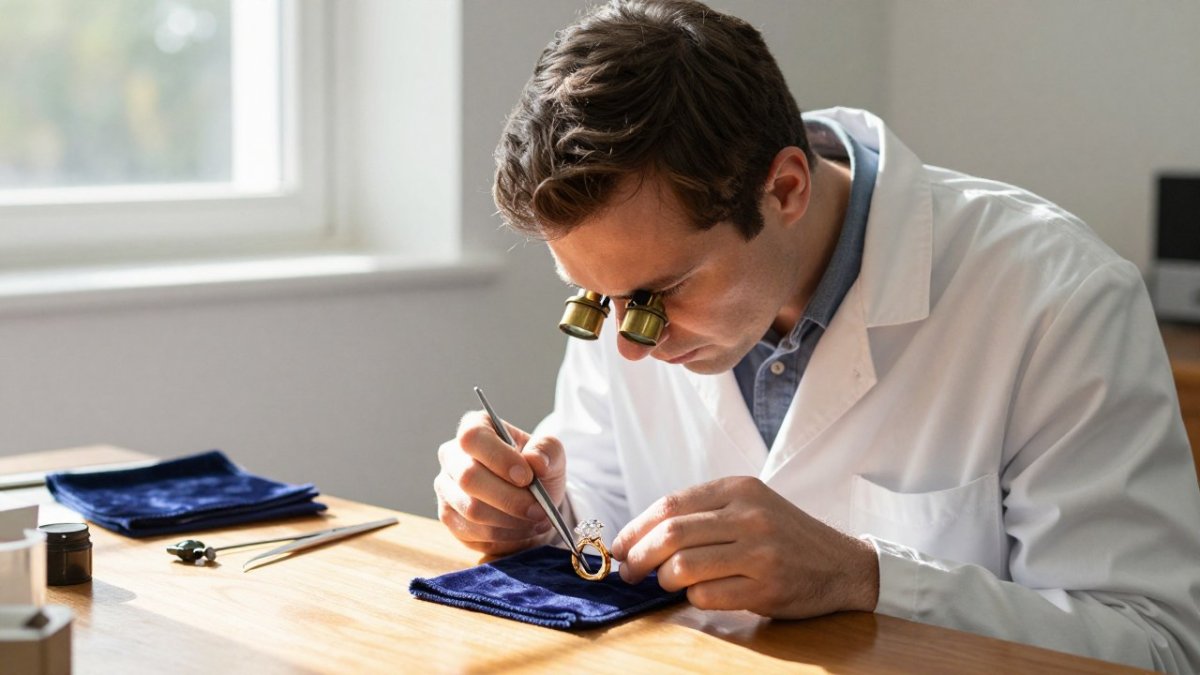
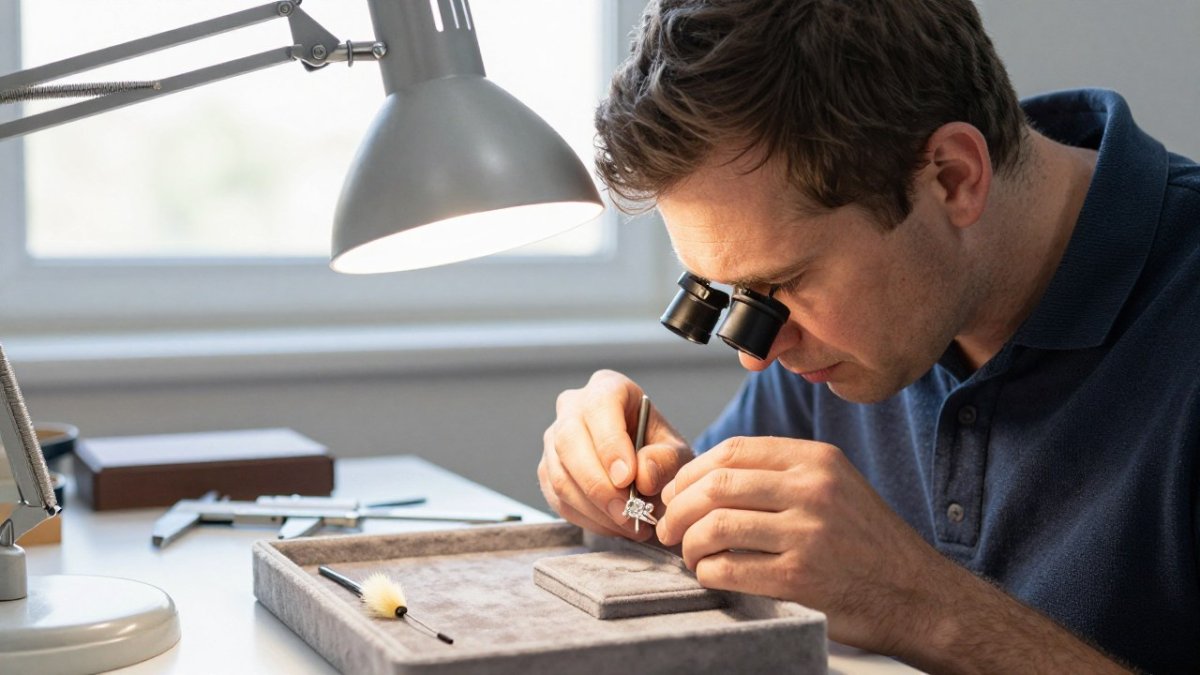
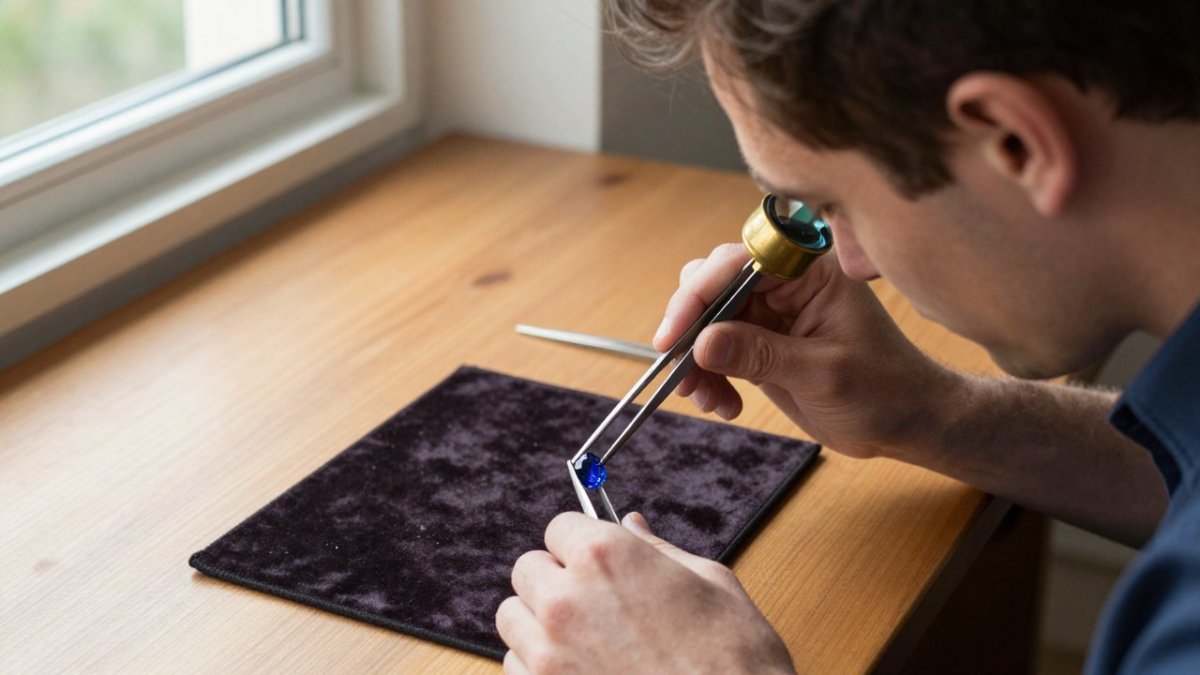
Start by measuring and describing the stone while it is out of its setting. Work in good light, on a clean, non-scratching surface such as a soft cloth or a padded tray. Record each measurement as you take it rather than relying on memory, and date the record.
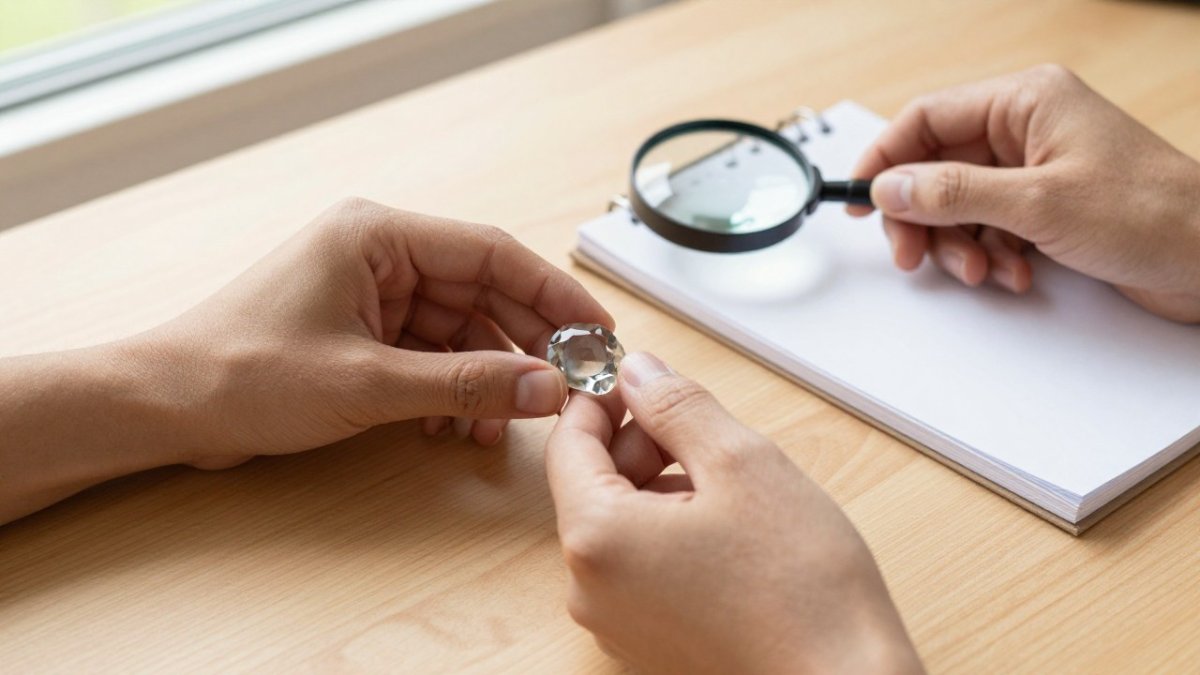
Carat weight, dimensions and shape
Carat weight is the standard measure of a gemstone's mass. One carat equals 0.2 grams. Record the weight to two decimal places where a scale allows it, and note the scale's precision so a reader knows how exact the figure is.
Next, record the dimensions in millimetres. For a round stone, note the diameter. For a fancy shape, note length, width and depth. Depth matters because it affects how the stone sits and how it faces up.
Describe the shape and cutting style in plain terms, such as round brilliant, oval, emerald cut, cushion or pear.
A practical checklist keeps this step consistent across a collection:
- Carat weight to two decimal places, with the scale's precision noted
- Length, width and depth in millimetres, with repeat readings where possible
- Shape and cutting style, using the same terms as any laboratory report
- Girdle thickness and any visible wear, chips or abrasions on the girdle or facets
- Any identifying marks, such as a laser inscription on the girdle or a natural feature that is unique to the stone
- The date the measurements were taken and the name of the person who took them
Colour, clarity and treatment disclosure
Colour is best described against a standard reference. For diamonds, graders use a colour scale from colourless through to light tints.
Clarity describes internal features (inclusions) and surface features (blemishes). Note what you can see with the naked eye and what a loupe shows. Do not guess at features you cannot confirm.
Treatment disclosure matters. Many gemstones are treated to improve colour or clarity, and treatments can affect value. If you know a stone has been treated, or if you are unsure, say so.
Watch out: A description built only from memory or from a seller's verbal claim is weak evidence.
Condition record before setting or shipping
A loose stone is most vulnerable when it is being handled, set or shipped. Before any of those steps, make a dated condition record. Photograph the stone from several angles with a scale in frame, note any existing chips, abrasions or inclusions that reach the surface, and record the stone's measurements again. Keep this record with the stone's other documents.
The table below summarises the key physical measurements and records to capture for a loose stone.
| Characteristic | What to record | Note |
|---|---|---|
| Carat weight | Weight to two decimal places | 1 carat equals 0.2 grams |
| Dimensions | Length, width and depth in millimetres | Take two readings of each |
| Shape | Round, oval, emerald, cushion or pear | Use the same terms as any grading report |
| Colour | Hue, tone and saturation | Note the light source used |
| Clarity | Inclusions and blemishes seen by eye and loupe | Quote laboratory wording where available |
| Treatment | Any known or suspected treatment | Record the source of the statement |
| Condition | Chips, abrasions and wear | Photograph with a scale in frame |
What to Do When a Stone Has No Laboratory Report
Many people hold loose stones with no laboratory report at all. This does not mean the stone is worthless or that you cannot insure it. It means the record is built on other evidence.
Here is what we suggest:
- Collect any purchase invoice, receipt, or written description from the seller
- Note the seller's name, the date, and the price paid
- Photograph the stone under good light, with a scale or ruler in frame
- Record every measurement and characteristic you can observe yourself
- Arrange a professional assessment or quote so an appraiser can describe the stone
A professional assessment is a useful next step. If you do not have a laboratory report, a qualified appraiser can examine the stone and document what they observe. Contact Gemmological Valuations of Australia to discuss what an assessment involves and what it would cover for your stone.
How to Photograph a Loose Gemstone for Insurance Records
Good photographs turn a written description into proof. Take several images so the stone is clear from each angle.
Use a plain, neutral background such as white or grey card. Avoid coloured fabric, since it can change how the stone appears.
Take these views:
- Face-up, straight on
- Side profile showing depth
- Back of the stone (the pavilion)
- A close-up of any inclusions or wear, with the date visible if possible
Use even, natural light if you can, and avoid direct flash, which causes glare. Keep the camera steady and in focus. Store the original image files. Do not only keep edited or compressed copies.
Store the photographs with the written record so the two can be matched later.
What a Gemstone Valuation Report Should Contain
A valuation report is the document an insurer or executor will look at first. It should be clear, dated and signed by the appraiser, and it should state its purpose on its face.
A sound report usually includes:
- The appraiser's name, qualifications and contact details
- The date of inspection and the date of valuation
- A full description of the stone, including weight, dimensions, shape, colour and clarity
- Any treatment disclosure
- Photographs of the stone
- The stated purpose of the valuation, such as insurance or estate use
- The valuation amount and the basis for it, such as replacement value
- A statement of any limits on the valuation
Check the purpose line carefully. A report prepared for estate use may read differently from one prepared for insurance. If you are unsure which you need, ask before the appraisal is done.
Insurer requirements and policy wording for unset stones
Unset stones are treated differently from mounted jewellery under many policies, and the wording matters more than most people expect. Before you submit a valuation, ask your insurer these questions and record the answers in writing:
- Is an unset stone covered under the general contents limit, or must it be scheduled by name?
- Does the policy require a valuation from a qualified appraiser, and does it specify any qualification or professional body?
- Is there a maximum insurable value for a single unset stone before additional documentation is required?
- How is the stone covered while it is in transit to or from an appraiser, or while it is awaiting setting?
- How is it covered in storage, such as a safe or a bank deposit box, and does the policy require a particular standard of storage?
- What proof of ownership does the insurer require if a claim is made?
- Does the policy require the valuation to be updated at set intervals, and what happens if it is not?
A common pattern is for policies to set a lower limit for unspecified loose stones than for scheduled items, and to require the item to be described in enough detail that it can be identified. Ask for the relevant policy wording in writing rather than relying on a verbal summary.
Note: Insurers may have their own requirements for what a valuation must contain. Check your policy wording or ask your insurer before the report is prepared, and keep a copy of the insurer's response with the valuation itself.
Storing Your Records and Keeping Documentation Current
Good records are only useful if you can find them and trust them. Store the physical documents in a fireproof, waterproof container.
Digital copies protect against loss. Scan the grading report, valuation, invoice, and photographs.
Review your records at least once a year. Update the valuation if the market has changed or if you have added to your collection.
A valuation is only accurate at the date it was made. Keep the date visible on every document so an insurer or executor can see how current it is.
Frequently Asked Questions
What information should I record about a loose gemstone for insurance?
Record the stone's species and variety, carat weight, dimensions, shape and cutting style, colour, clarity characteristics, and any treatments. Note the date you documented it, the valuation purpose, and the replacement value in AUD. Include any identifying marks or inscriptions, and the name and credentials of the person who examined it. A clear, consistent record makes it far easier for your insurer to verify the stone if you ever need to make a claim.
Do I need a gemmological report to insure a loose gemstone?
Not always, but a laboratory grading report from a recognised gemmological laboratory is the strongest evidence of identity and quality. Many insurers will accept a written valuation from a qualified appraiser instead, provided it describes the stone in enough detail to identify it. Check your policy wording before you assume either option is enough, and ask your insurer what documentation they require for unset stones.
How should I photograph a loose gemstone for insurance records?
Photograph the stone on a plain, neutral background with even natural light. Take a clear overall image, then close-ups of the table and the side profile. Include a scale reference such as a millimetre ruler, and keep the stone's original documentation in the same photo set where practical. Store the images with the date taken and the item description so they stay linked to your written record.
Can I insure a loose gemstone without a certificate?
Yes, you can usually insure a loose gemstone without a grading certificate, but the claim will rest on the quality of your other evidence. A written valuation from a qualified appraiser, supported by detailed photographs, a purchase invoice and a condition record, gives your insurer what it needs to assess the stone. Without these, settling a claim becomes harder, so build the documentation before you need it.