 How-to
How to Value High End Watches: A 2026 Guide
Table of Contents
- Understanding the Current Market for High End Watches
- Factors Affecting Watch Resale Value
- Why Certified Watch Appraisal Services Matter
- Step-by-Step: How to Value Your Watch
- Watch Insurance Valuation: What You Need to Know
- Tax and Estate Planning Implications for High End Watches
- Common Mistakes to Avoid When Valuing Watches
- Conclusion
- Frequently Asked Questions
Last Updated: September 16, 2026
Understanding the Current Market for High End Watches
Knowing how to value high end watches starts with understanding that a watch is worth what a genuine buyer will pay on the day, not what the original receipt says. At Gemmological Valuations of Australia, we see this gap constantly: owners assume retail price equals resale price, and it rarely does.
How Macro-Economic Factors Drive Demand
Luxury watches behave like other hard assets when money gets expensive. When interest rates rise and disposable income tightens, discretionary buyers step back and the gap between asking and achieved prices widens; when credit is cheap, demand for investment grade pieces, particularly stainless steel sports models from the major houses, pushes prices up.
Factors Affecting Watch Resale Value
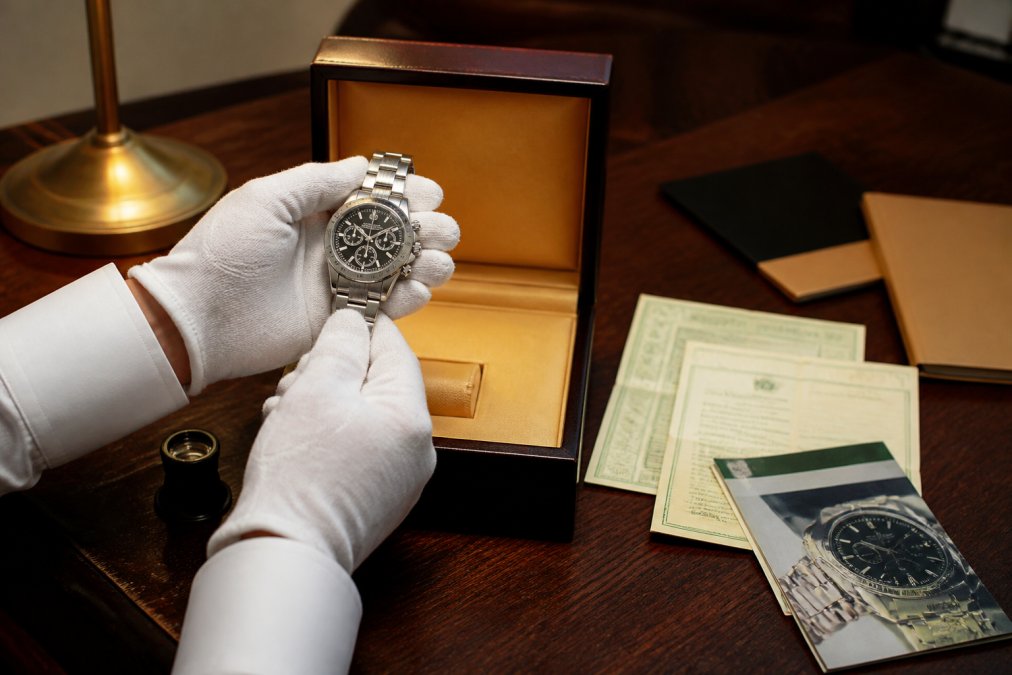
Resale value is decided by a short list of variables, and most owners overestimate some while ignoring others. The brand and reference matter most, but condition, documentation, and originality decide whether a piece achieves the top of its range or the bottom.
The Role of Brand Prestige and Rarity
Prestige is not marketing fluff; it is measurable pricing power. A handful of houses consistently command stronger secondary market results because their craftsmanship, movement finishing, and heritage sustain collector demand across decades. Within those houses, rarity and reference number drive the premium: limited editions, discontinued dial variants, and early production examples of an iconic caliber attract the strongest bids.
Condition, Service History, and Original Packaging
Condition is where valuations are won and lost. A polished case, a replaced bezel, or an incorrect crown can knock a significant margin off an otherwise desirable watch, because collectors pay for originality. Service records matter just as much: a documented manufacturer service reassures buyers, while an undocumented overhaul by an unknown workshop raises questions about parts and competence.
Why Certified Watch Appraisal Services Matter
A certified watch appraisal service produces a defensible, documented opinion of value that insurers, executors, and courts will accept, the practical difference between a valuation and a guess. Anyone can check completed auction results, but interpreting them requires knowing which comparables are genuinely equivalent, how condition adjustments work, and what the current bid-ask spread looks like.
What to Look for in a Qualified Appraiser
Look for formal credentials, specialist knowledge of both watches and gemstones, and a written report you can hand to a third party. Membership of a recognised valuer body signals accountability, and experience across many references matters more than a single brand specialisation.
Step-by-Step: How to Value Your Watch
Total time: 1 to 3 hours of your own research, plus professional appraisal time if you need a formal report. Difficulty: Moderate.
What You'll Need
- Reference and serial number from the case
- Original box, warranty papers, and service records
- A loupe or magnifier and good lighting
- Access to recent auction results and dealer listings
Step 1: Gather Documentation and Provenance [Time: 30-60 minutes]
Collect everything that proves what the watch is and where it came from. Note the reference number, serial number, and any service invoices. Provenance, meaning the documented ownership history, supports value when it is clean and complete.
Expected result: A clear record of the watch's identity and history.
Step 2: Assess Condition and Authenticate [Time: 30-60 minutes]
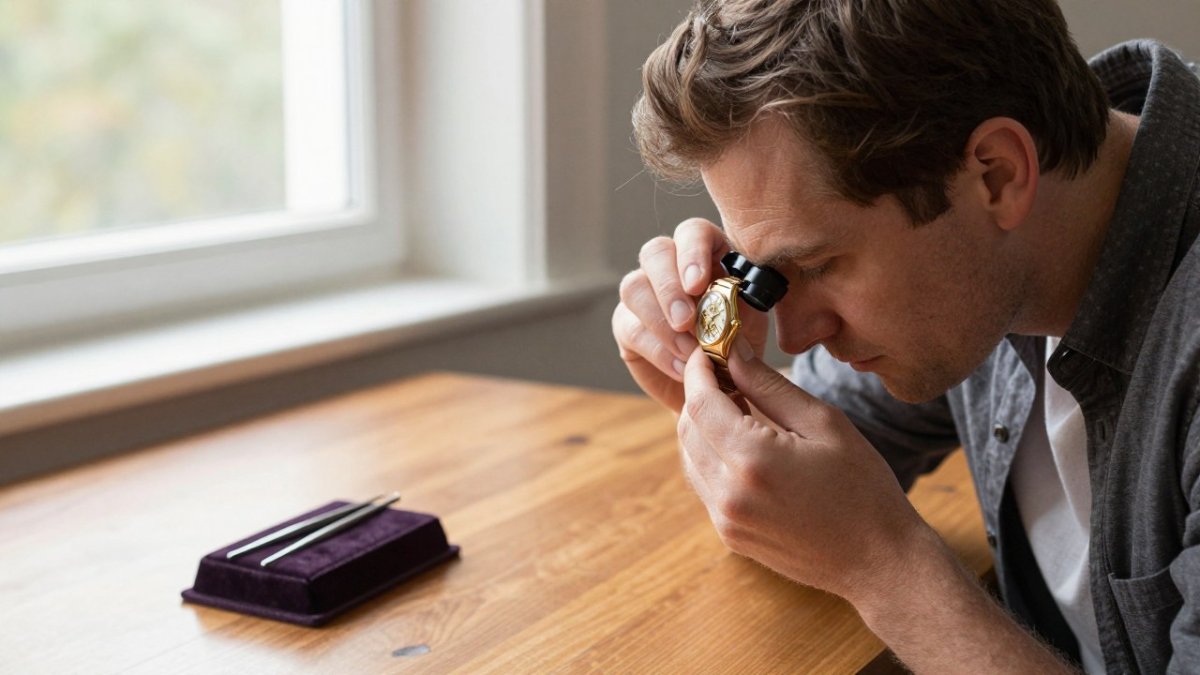
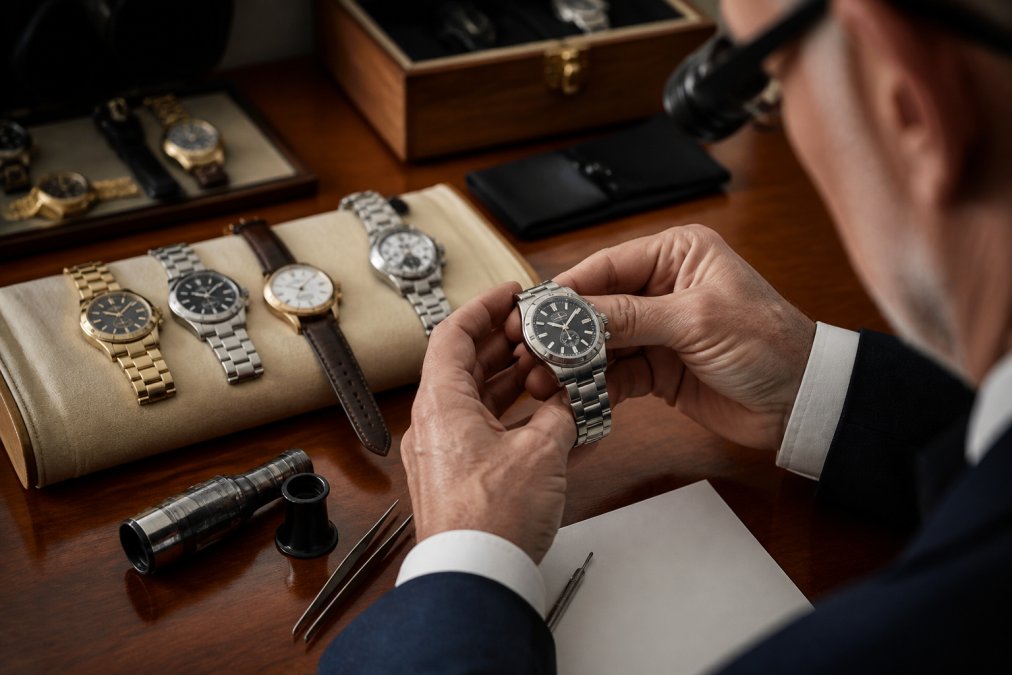
Examine the case, bezel, dial, and bracelet for polishing, replacement parts, or damage. Authentication is the step most owners skip and the one that matters most: a counterfeit or a watch with a swapped movement has no collector value at all. Check that the serial number is consistent with the reference and era.
Expected result: A confident view of originality and condition.
Step 3: Research Market Comparables and Auction Results [Time: 1 hour]
Find recent sales of the same reference in comparable condition, then adjust for your watch's strengths and weaknesses. Auction results show achieved prices; dealer listings show asking prices, which are usually higher.
Expected result: A defensible value range, not a single number.
| Valuation Method | Best For | Strength | Limitation |
|---|---|---|---|
| Auction comparables | Collector and investment pieces | Real achieved prices | Limited recent data for rare references |
| Dealer listings | Common references | Wide sample | Asking prices, not sales |
| Professional appraisal | Insurance, estate, legal use | Documented and defensible | Requires an appointment |
Watch Insurance Valuation: What You Need to Know
A watch insurance valuation is a documented assessment of replacement value, prepared so your insurer can set cover and settle a claim fairly. It is not the same as a market or resale figure: insurers want replacement cost, which reflects what it would take to source an equivalent watch today and can sit well above what you would receive selling it.
Tax and Estate Planning Implications for High End Watches
Watches can carry capital gains tax consequences when sold, and they form part of your estate for probate purposes. The record you keep now determines how straightforward the paperwork is later, so confirm your position with your solicitor or accountant.
Capital Gains Tax and Collectables
The Australian Taxation Office treats certain valuable items as collectables under specific rules, and watches can fall within that treatment depending on their nature and value. Keep the original purchase documentation, not just a bank record, because acquisition cost and sale proceeds both matter; and retain service invoices, because the cost base can be adjusted for restoration and certain holding costs.
Probate and Estate Distribution
For executors, a formal, dated valuation is often the simplest way to establish the value of a collection for distribution among beneficiaries. Where a dispute arises, a report prepared by a qualified valuer carries far more weight than an informal estimate, and should identify each piece individually, state the purpose of the valuation, and be signed by the valuer.
Documenting Service History to Maximise Value
Service history is one of the most under-documented aspects of watch ownership, and it directly affects both resale value and estate administration:
- Keep every invoice: Manufacturer service invoices, independent watchmaker receipts, and parts replacement records all belong in the file.
- Record the date and scope: Note what was done, by whom, and when. A service that included a new mainspring and gaskets is more reassuring than a vague 'serviced'.
- Note any parts replaced: Originality matters to collectors, so record whether hands, dial, bezel, or crown were replaced and whether the original parts were retained.
- Photograph the watch and paperwork: Date-stamped photographs of the watch, its serial number, and its documents support both insurance and estate purposes.
- Store documents with the watch: A service booklet kept with the box and papers is far more useful than a folder in a filing cabinet.
Insurance and Valuation Currency
Keep your valuation current, because replacement costs move with the market, and review cover after any significant market shift or after acquiring or disposing of a piece.
Common Mistakes to Avoid When Valuing Watches
Most valuation errors are not arithmetic errors; they are assumptions. These are the mistakes that most often cost owners money.
Mistake 1: Treating Retail Price as a Benchmark
Retail includes brand margin, duty, and dealer profit that disappear the moment the watch leaves the boutique, so owners who anchor on the original receipt are often surprised when a dealer offer lands well below it. The correct anchor is achieved prices for the same reference in comparable condition.
Mistake 2: Skipping Authentication Verification
Most guides assume the watch is genuine. That assumption is the single most expensive error in the category, because a counterfeit, a 'frankenwatch' assembled from mixed genuine and aftermarket parts, or a watch with a swapped movement has no collector value at all. Verify the watch before researching comparables:
- Serial and reference consistency: The serial number should be consistent with the reference and the production era. A serial outside the reference's known production window is a red flag.
- Dial and hands: Check font, spacing, and lume plots against known examples. Service replacement dials and hands are common and reduce value.
- Case and bezel: Look for polishing that has softened lugs or thinned chamfers, and for bezels that do not match the reference's correct insert or finish.
- Movement: Where the caseback allows, confirm the movement family matches the reference. A swapped movement is a serious defect.
- Bracelet and clasp: Confirm the bracelet reference and end links are correct, and that the clasp codes are period-appropriate.
- Papers and box: Documentation is not proof on its own, but matching serial numbers across warranty papers, box, and case add confidence.
Mistake 3: Ignoring the Cost of a Due Service
A watch due for overhaul is worth less than an identical one freshly serviced, and buyers price that in. The gap is not just the service cost; it is the uncertainty about what the service will reveal, so factor a service allowance into your range.
Mistake 4: Undervaluing Documentation
Owners routinely treat a missing box or papers as trivial. In practice, a full set with matching serial numbers and papers typically achieves more than the same watch sold loose, and missing documentation widens the bid-ask spread.
Mistake 5: Relying on a Single Data Point
One auction result, one dealer listing, or a friend's opinion is not evidence. A valuation is a range supported by multiple comparable sales, adjusted for condition, documentation, and originality. Where the sample is thin, say so rather than presenting false precision.
Mistake 6: Confusing Asking Prices with Achieved Prices
Dealer listings show what sellers hope to get. Auction results show what buyers actually paid. The two can diverge sharply for slow-moving references, and treating an asking price as a comparable is one of the most common ways owners overestimate value.
Conclusion
Valuing a prestige timepiece properly takes documentation, condition assessment, and real market comparables, and getting it wrong is expensive at claim time or in an estate. Gemmological Valuations of Australia provides precise, well-documented appraisal reports for insurance, estate, and legal purposes, backed by a senior appraiser with over 50 years of experience and founding membership of the National Council of Jewellery Valuers. Contact us to arrange a valuation and know exactly what your watch is worth.
Frequently Asked Questions
How do I find out what my high end watch is worth?
Start by gathering all documentation, including warranty papers, service records, and original packaging. Then research recent auction results and secondary market listings for the same reference number. For an accurate figure, engage certified watch appraisal services that can assess condition, authenticate components, and provide a documented market valuation. Professional appraisers consider factors like brand prestige, rarity, and current collector demand that online tools often miss.
Do high end watches hold their value?
Some do, but it depends on the brand, model, and market conditions. Certain stainless steel sports models from prestigious brands have historically retained or increased in value, particularly limited editions with strong collector demand. However, many watches depreciate after purchase, especially those with precious metals or complex complications. Macro-economic factors, secondary market trends, and the watch's condition and provenance all influence whether a timepiece holds its worth over time.
What documentation should I keep to maintain my watch's value?
Keep the original box, warranty papers, purchase receipt, and all service records. These documents establish provenance and demonstrate proper maintenance, which can significantly affect resale value. A complete set with matching serial numbers and reference numbers is more attractive to collectors and can command a higher price. For insurance purposes, a formal watch insurance valuation from a qualified appraiser provides the documented evidence your insurer requires.
How does the condition of a watch affect its market valuation?
Condition is critical. Scratches, dents, or a worn bezel reduce value, while an unpolished case with original finishes may command a premium. Movement type and service history also matter: a recently serviced watch with documented records is worth more than one needing repairs. Authentication is essential, as replaced parts or a non-original dial can drastically lower value. Professional appraisers assess all these factors to determine an accurate market valuation.