 How-to
Is Professional Jewellery Appraisal Worth It for Your Pieces?
Quick Summary
A jewellery appraisal is worth it for valuable pieces, especially for insurance, estate division or when there is no receipt or history. For a modest piece with a receipt, or where an insurer's schedule is enough, the fee may not be justified. Weigh the piece's likely value and purpose against the cost before booking.
- Replacement value is the figure insurers usually need, and it is generally higher than a resale offer.
- Update your jewellery appraisal every few years, or sooner after large movements in metal or gemstone prices.
- Ask any appraiser about their qualifications, and whether they also buy or sell the pieces they value.
- Bring receipts, previous valuations, certificates, photographs and the original box to your appointment.
- State the purpose of the appraisal before the examination so the report matches the decision you need to make.
Table of Contents
- What a Jewellery Appraisal Is and What It Includes
- When a Professional Appraisal Is Worth the Cost
- Jewellery Valuation for Insurance: Replacement Value Explained
- Jewellery Appraisal vs Resale Value
- How Often to Update a Jewellery Appraisal
- Checking an Appraiser's Qualifications and Independence
- Booking Your Appraisal: What to Bring and Next Steps
- Frequently Asked Questions
Is Professional Jewellery Appraisal Worth It for Your Pieces?
Last Updated: November 7, 2026
What a Jewellery Appraisal Is and What It Includes
A jewellery appraisal is a written document that states the value of a piece based on a physical examination by a qualified valuer. A professional appraisal describes each item in detail and gives a clear value figure with the reasons behind it.
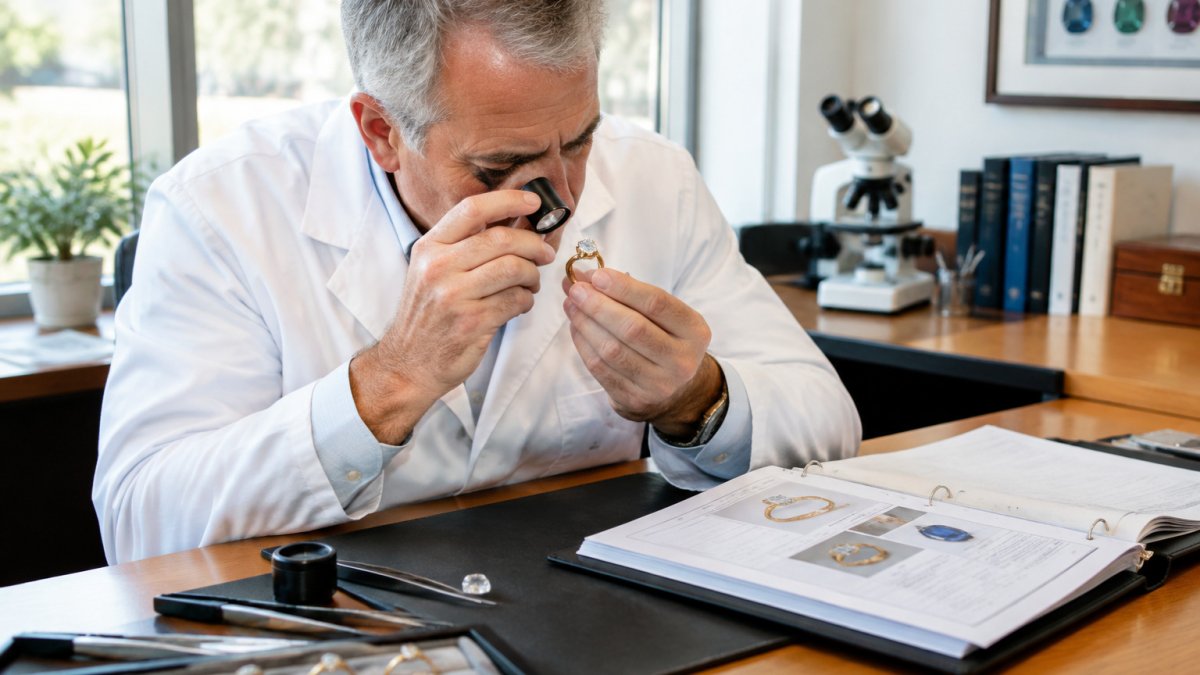
Most people think an appraisal is just a price tag. It is more than that. A full jewellery appraisal usually includes a description of the item, its materials, its condition, and the basis for the stated value.
A typical appraisal report covers:
- Item description: type, style, and any maker's marks or hallmarks
- Metal details: metal type and purity, such as 18ct gold or platinum
- Gemstone details: stone type, carat weight, cut, colour, and clarity
- Condition: wear, damage, repairs, or missing stones
- Valuation: the stated value and the purpose it is written for
Watch out: a report that gives only a single number, with no description of the item, gives you little to check or rely on later.
Photographs can help identify the piece clearly. This matters most for insurance and estate records, where a precise description protects you if a claim or dispute arises.
When a Professional Appraisal Is Worth the Cost
An appraisal is worth paying for when the piece is valuable enough that a mistake would cost you real money, or when you need an official record. For a simple gold band with little sentimental or monetary value, the fee may not be justified.
A useful way to decide is to weigh four factors together: the piece's likely value, the purpose you need it for, the cost of the appraisal, and the risk of getting the value wrong. The fee is usually small relative to the downside when the piece is a significant asset, but the balance shifts for low-value items or where no formal record is needed.
Use this decision framework as a starting point:
- High-value piece, insurance or estate purpose: An appraisal is usually worth it. A written report supports a claim, helps divide an estate fairly, and gives you a defensible record if ownership is questioned.
- High-value piece, no immediate purpose: An appraisal can still be worth it as a baseline, especially if the piece has no receipt or history. It also flags condition issues before they worsen.
- Low-value piece, insurance purpose: Check your policy first. Many policies have jewellery limits and excesses, and the cost of appraising several low-value items may exceed the benefit. A single schedule entry or a recent purchase receipt may be enough.
- Low-value piece, selling purpose: A dealer's offer or a scrap quote may tell you more about what you will actually receive than a formal replacement valuation. An appraisal is less useful here unless the piece has unusual stones or provenance.
- Undocumented or inherited piece: An appraisal is often worth it because you have no other reliable starting point. The report creates a record where none existed.
Consider an appraisal when:
- The piece is worth enough that replacing it would be a significant expense
- You need proof of value for insurance cover
- The item is part of an estate that must be divided or valued
- You are planning to sell and want an accurate starting figure
- The piece has no paperwork, purchase receipt or history
A common approach is to weigh the appraisal fee against the risk of being under-insured or unable to prove what you own. If losing the piece would hurt financially, the cost of a professional report is usually small by comparison. If the piece is modest and you already have a receipt, the fee may be better spent elsewhere.
Watch out: an appraisal written for one purpose may not serve another. A replacement valuation for insurance will not tell you what a dealer will pay, and an estate valuation may use a different basis again. State the purpose before the examination so the report is written for the decision you actually need to make.
Jewellery Valuation for Insurance: Replacement Value Explained
For insurance, the figure that usually matters is replacement value. This is the amount it would cost to buy the same or a closely similar piece today from a retailer. It is generally higher than what you could sell the piece for.
Your insurer will usually ask for proof of value, and a written appraisal is one of the clearest ways to provide it. Many policies set limits on items of jewellery, so a current valuation helps you decide whether you need to schedule the pieces separately.
Check your policy wording and speak to your insurer before you rely on any appraisal. Requirements differ between insurers, and we cannot promise how a particular company will treat a report. For a clear view of your own cover, see our [page 1 | section:Jewellery Valuation for Insurance: Replacement Value Explained]. Our [article 1 | section:Jewellery Valuation for Insurance: Replacement Value Explained] on family-law valuations also explains how formal reports are used in other settings.
Jewellery Appraisal vs Resale Value
An appraisal and a resale offer are not the same thing. The appraised value is usually a replacement or market figure, while a dealer's buying price is often lower because they need room to make a profit.
A replacement valuation answers a specific question: what would it cost to buy the same or a closely similar piece today from a retailer? That figure includes retail margin, and it assumes you are buying, not selling.
- Replacement value: what it costs to buy again, used mainly for insurance. It is generally the highest of the figures and is not a prediction of sale price.
- Market value: what a willing buyer might pay in an open market, which depends on the stone, the design, the maker, and current demand.
- Resale or trade offer: what a dealer will pay you now. Expect this to sit below market value because the dealer needs a margin.
- Auction estimate: a range an auction house expects the piece to achieve, before commission and fees. It is not a guaranteed price.
- Scrap value: what the metal is worth if the piece is broken down. For pieces where the design or stones carry most of the worth, scrap value may be far below any appraisal figure.
A common pattern is for an insurance replacement valuation to be several times a dealer's offer, particularly for pieces with strong retail branding or design value. That does not mean the appraisal is wrong; it means the two figures measure different things.
Do not expect to recover the full appraised figure when you sell. Set your expectations before you approach a buyer, and ask what basis the figure is quoted on.
Watch out: an appraisal written for insurance is not a sale valuation, and presenting it to a buyer as a price expectation can lead to disappointment or a stalled sale.
How Often to Update a Jewellery Appraisal
Valuations do not stay accurate forever. Gold and gemstone prices move, and the market for certain styles and stones changes over time. An old appraisal may understate or overstate what a piece is worth today.
Many owners review their appraisal every few years, and sooner if precious metal or gemstone prices have moved sharply. It is also sensible to update the appraisal after a repair, a change of stones, or any major change in the piece.
Keep the most recent report with your insurance papers and estate records. Where a policy requires an updated valuation, follow the schedule your insurer sets.
Checking an Appraiser's Qualifications and Independence
Not every person who calls themselves a valuer has the same training or standing. Before you book, ask for evidence of qualifications and professional membership, and check that they are current.
Our senior appraiser, Con Pappas, has more than 50 years of experience in the industry. Gemmological Valuations of Australia is a Founding Member of the National Council of Jewellery Valuers, No. 085.
When you choose an appraiser, ask these questions:
- What qualifications and memberships do you hold, and can I verify them?
- Do you work independently, or do you also buy or sell the pieces you value?
- Will the report describe the item in enough detail to support an insurance claim or estate division?
- Who will examine my items, and how will they be stored and handled?
An appraiser who also buys stock has an interest in the figure they give. Independence matters most when the report will be used to settle a claim, an estate, or a dispute.
Booking Your Appraisal: What to Bring and Next Steps
Before your appointment, gather everything that helps identify the piece. Bring any purchase receipts, previous valuations, certificates, photographs, and the original box if you have it.
Pieces that were inherited or have no paperwork can still be appraised. Share any history you know, even if it is limited, as this can help the examination.
To arrange an appraisal, visit our [page 2 | section:Booking Your Appraisal: What to Bring and Next Steps] to see the service and what it covers. When you are ready to proceed, [page 3 | section:Booking Your Appraisal: What to Bring and Next Steps] has our contact details so you can arrange an appointment.
Pricing depends on the number of items, their type, and the level of detail required, so please contact us for a quote before you book.
Before you book, it helps to know what to gather and what the appraiser will need from you.
| Item to bring | Why it helps |
|---|---|
| Purchase receipts | Confirms origin and purchase price |
| Previous valuations | Gives a starting point for comparison |
| Certificates | Supports stone and metal details |
| Photographs | Helps identify the piece clearly |
| Original box | Can support identification and history |
| Known history | Helps the examination, even if limited |
Get a clear, documented valuation from Gemmological Valuations of Australia. Our senior appraiser has more than 50 years of experience, and our reports are written to support insurance, estate, and planning needs. Contact us to arrange your appraisal.
Frequently Asked Questions
Is a professional jewellery appraisal worth the cost?
It depends on what the piece is worth and why you need the valuation. An appraisal is usually worthwhile when a item carries significant value, is needed for insurance or estate purposes, or when you cannot confidently describe its gemstones, metal and condition yourself. For low-value pieces with little documentation, the fee may exceed the benefit. Contact Gemmological Valuations of Australia for a quote once you share a description of your items, and compare that against the replacement cost of the piece to decide.
What is the difference between an appraisal and a resale value?
An appraisal usually states the replacement or insurance value, which is the amount needed to buy a similar piece from a retailer today. Resale value is what a buyer, dealer or auction house might actually pay, which is typically lower. Scrap value, based on the metal and stones alone, is lower again. Knowing which figure you need before you book prevents disappointment when you come to sell or make a claim.
How often should jewellery be reappraised?
Most owners review an appraisal every few years, and sooner if gold or diamond prices have shifted noticeably, if a piece has been altered or repaired, or if your insurer requires updated documentation. Keeping the valuation date on file helps show that your cover reflects current replacement costs. Your insurer may have its own requirements, so check your policy terms before deciding on a schedule.
What should a professional jewellery appraisal include?
A complete written report typically describes each piece, including metal type and purity, hallmarks, gemstone type, weight, cut, colour and clarity where applicable, and visible condition. It should state the valuation date, the value type (such as replacement value) and the appraiser's credentials. Photographs and a clear description of any signs of wear or repair make the report more useful for insurance and estate purposes.