 Ultimate guide
Jewellery Valuation for Family Law Disputes: A Guide
Table of Contents
- When a Jewellery Valuation Becomes Evidence in a Family Law Dispute
- Fair Market Value vs Replacement Value: The Distinction That Decides Your Settlement
- How to Value Jewellery for Divorce Settlement: A Step-by-Step Process
- NCJV Registered Valuer Requirements and What They Mean for Court Evidence
- What a Jewellery Valuation Report Template Should Contain
- Disputed Jewellery, Depreciation and High-Value Collections
- Sentimental Value, Tax on Disposal and Digital Jewellery Assets
- Frequently Asked Questions
Last Updated: September 13, 2026
When a Jewellery Valuation Becomes Evidence in a Family Law Dispute
A jewellery valuation for family law disputes is a formal, independent assessment of what a piece is worth, prepared so that a court, lawyer or mediator can rely on it during a property settlement. At Gemmological Valuations of Australia, we prepare these reports for separating couples, executors and their legal advisers, and the difference between a valuation that survives scrutiny and one that collapses under cross-examination usually comes down to methodology, not the jewellery itself.
Here is the tension most people miss. Family law matters are decided on evidence, and jewellery is one of the hardest assets to evidence because its value is not printed anywhere. There is no title deed for a diamond ring. There is no bank statement showing what a strand of pearls is worth today. What exists is a piece of jewellery, a memory of what it cost, and whatever paperwork survived the purchase.
That gap is where disputes are won and lost.
Property settlement, financial disclosure and the jewellery schedule
Under the family law system, both parties must make full and frank financial disclosure. Every asset, liability and financial resource goes on the table, including jewellery, watches, loose gemstones and collections. A jewellery schedule is simply the inventory of those items, listed with enough detail that each piece can be identified and valued.
Most schedules fail for the same reason: they describe items too vaguely. "Gold ring" tells a valuer nothing. "Yellow gold dress ring, claw-set with a single round brilliant-cut diamond, approximately 6mm diameter, stamped 18K" gives an appraiser something to work with before the piece is even in hand.
The practical consequence is straightforward. A vague schedule invites argument. A precise one narrows the dispute to value alone, which is exactly where you want it.
Fair Market Value vs Replacement Value: The Distinction That Decides Your Settlement
Fair market value and retail replacement value are not the same number, and using the wrong one is the single most common error in jewellery disputes. Fair market value is what a willing buyer would pay a willing seller in an open market, with neither under pressure. Retail replacement value is what it would cost to buy an equivalent new piece from a retail jeweller.
Those two figures can diverge sharply, and the gap matters enormously in a property settlement.
Fair market value reflects a second-hand, private-sale or auction reality. It accounts for the fact that a buyer of a pre-owned piece expects a discount against new retail pricing.
Retail replacement value is an insurance figure. It assumes the piece is lost, stolen or destroyed and must be replaced new, from a retailer, at today's prices.
Courts dealing with asset division generally want fair market value, because the question is what the asset is actually worth to the parties, not what it would cost to replace. An insurance valuation used in a settlement will usually overstate the pool of assets, sometimes substantially, and that overstatement cuts against whichever party is trying to be reasonable.
How to Value Jewellery for Divorce Settlement: A Step-by-Step Process
Valuing jewellery for a divorce settlement follows a defined sequence: identify the piece, test and grade the materials, assess the gemstones, apply the correct valuation basis, and document everything in a report that stands on its own. Skipping any step leaves an opening for the other party to argue the figure is unreliable.
Here is how the process runs in practice.
- Inventory and identify. Every item is listed, photographed and described. Hallmarks, maker's marks and any original documentation are recorded.
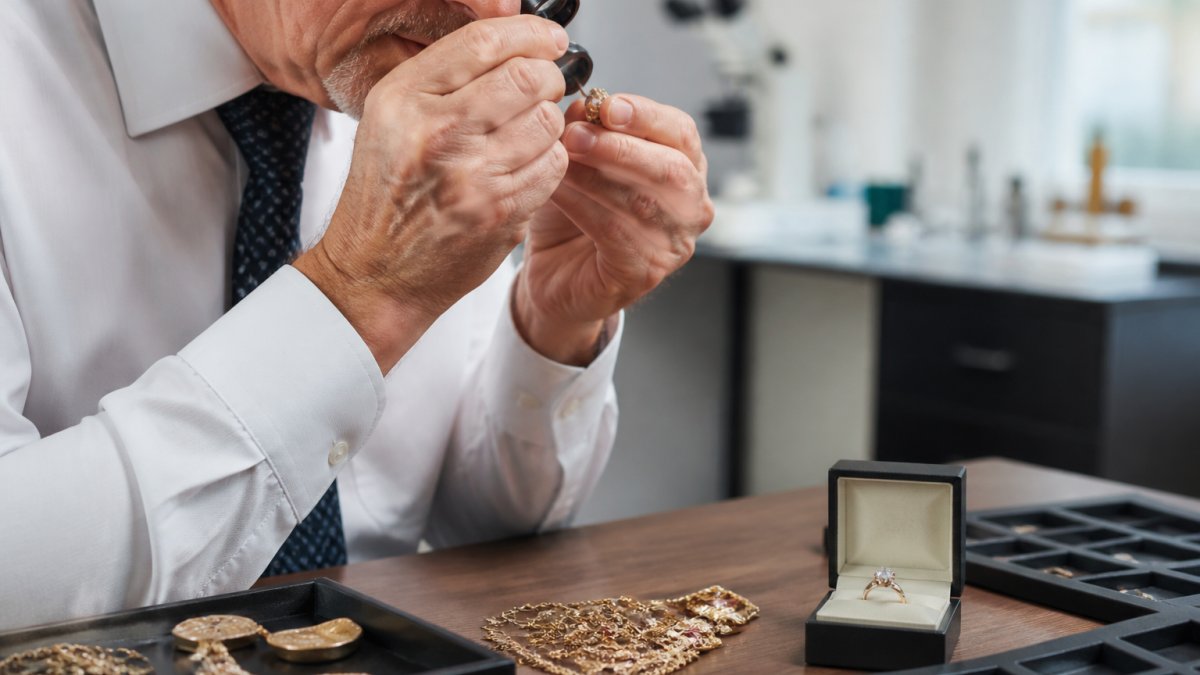
- Test the metal. Precious metals are verified, not assumed. A stamp can be wrong, worn, or absent on older pieces.
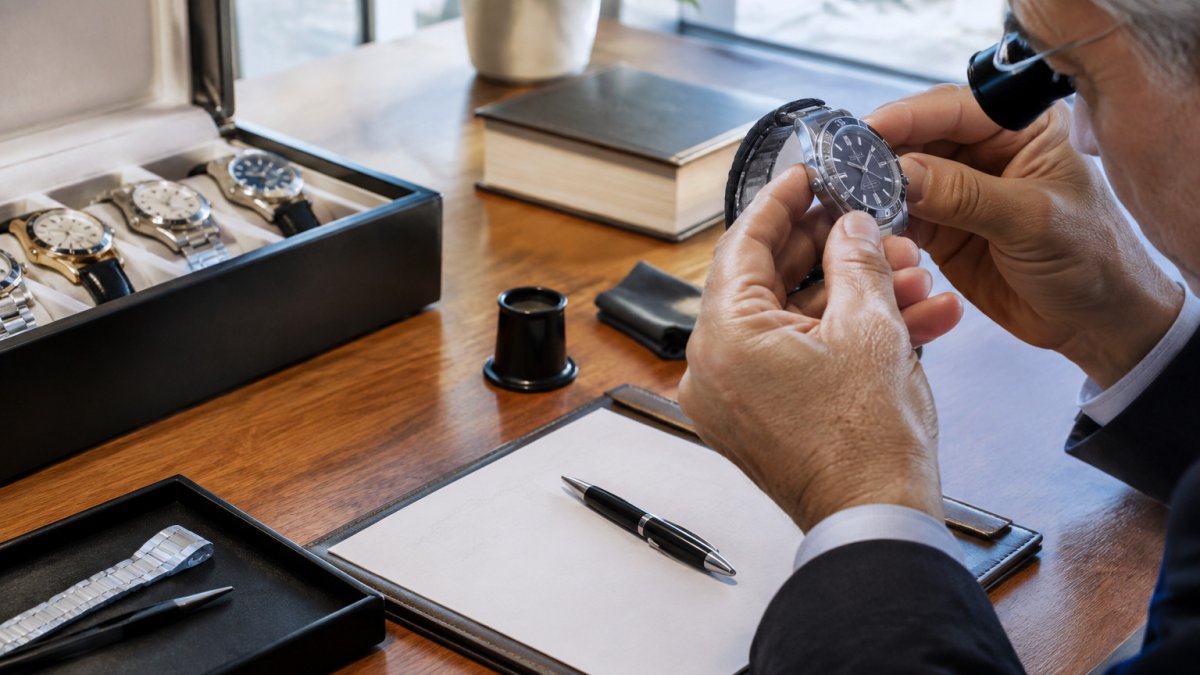
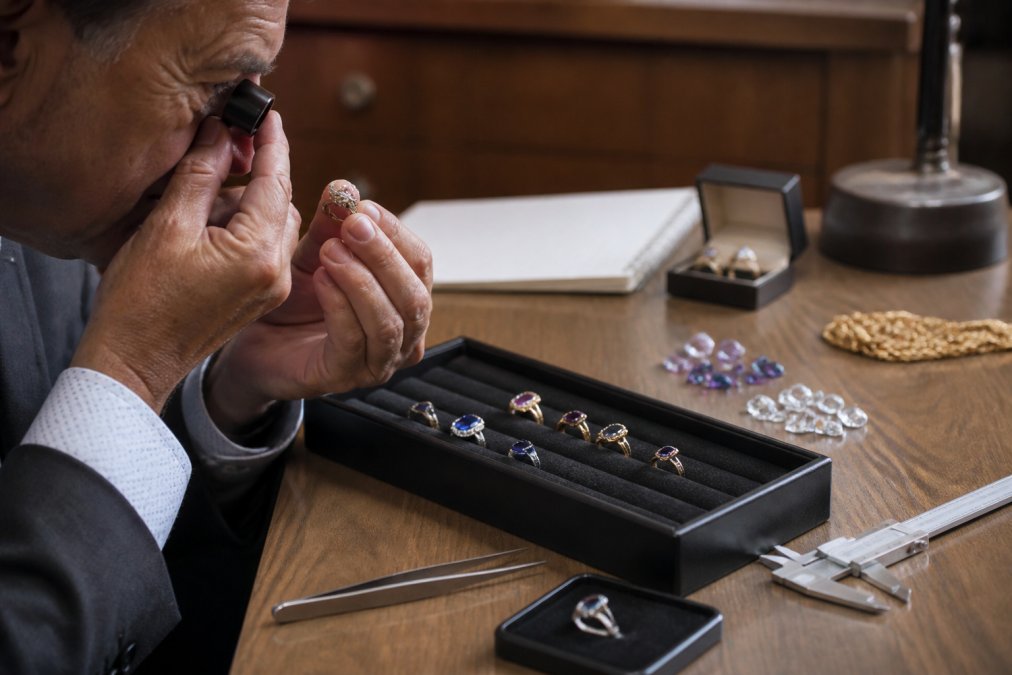
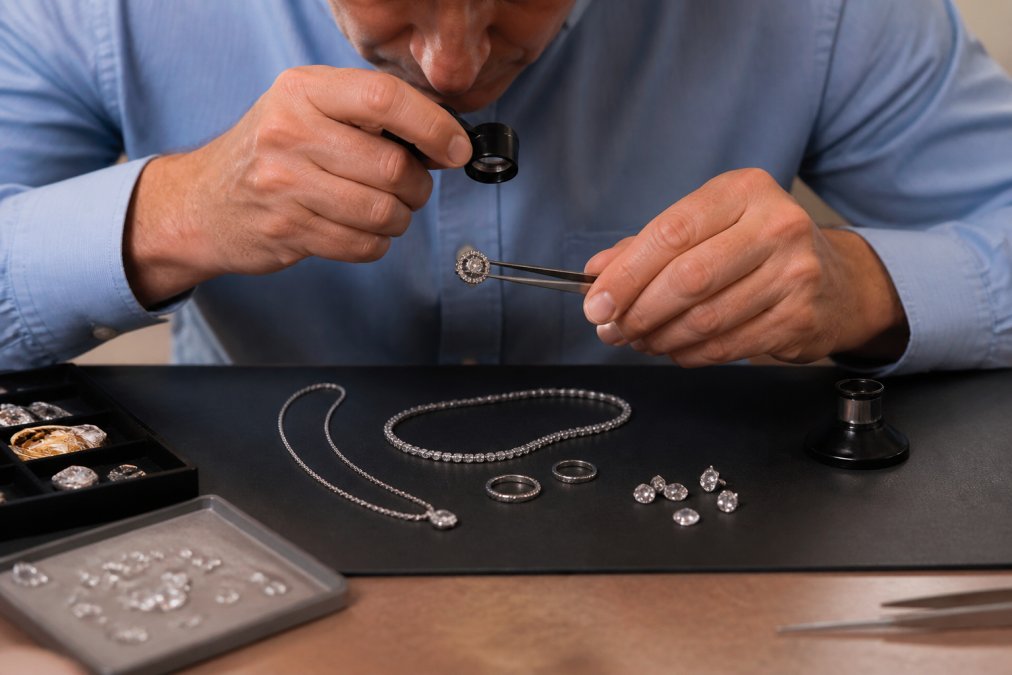
- Grade the gemstones. Cut, colour, clarity and carat weight are assessed under proper lighting with calibrated equipment. Treatments and synthetics are identified here.
- Establish the valuation basis. The report states clearly whether it reflects fair market value, retail replacement value or another basis, and why that basis suits the purpose.
- Apply current market data. Values are set against current conditions, not a price list from a decade ago.
- Document and sign. The finished report includes methodology, equipment used, photographs and the valuer's credentials.
Checklist: preparing pieces, paperwork and photographs before the appraisal
- Clean each piece gently; do not polish or repair anything before the appraisal
- Gather original receipts, certificates, insurance schedules and prior valuations
- Photograph each item from multiple angles, including any hallmarks or stamps
- Note any provenance: who bought it, when, and for what occasion
- List anything you know about treatments, repairs or alterations
- Separate inherited pieces from jointly acquired ones
- Bring the pieces in person; photographs alone cannot support a defensible figure
NCJV Registered Valuer Requirements and What They Mean for Court Evidence
An NCJV registered valuer is a valuer who has met the membership and assessment standards of the National Council of Jewellery Valuers, the peak body setting competency expectations for the profession. For court purposes, that registration is the clearest signal that the person signing the report is qualified to do so.
Why does it matter? Because a valuation is only as strong as the credentials behind it. A lawyer cross-examining your valuation will ask what qualifies the valuer to state that figure. Registration answers that question before it is asked.
Registration is not a one-off. Members are expected to maintain their knowledge and follow a defined methodology, which is what separates a professional appraisal from an opinion offered over a counter.
When you are choosing a valuer for a matter that may end up before a court, ask directly:
- Are you a registered valuer with the relevant professional body?
- How long have you been practising?
- What equipment do you use, and do you test or assume?
- Will the report state its valuation basis explicitly?
The answers tell you more than any advertised claim.
What a Jewellery Valuation Report Template Should Contain
A jewellery valuation report template should contain, at minimum: a unique report number and date, a full description of each item, the valuation basis used, the methodology applied, supporting photographs, the valuer's qualifications, and a signature. A report missing any of these is vulnerable to challenge.
A complete report typically includes:
| Section | What It Should State | Why It Matters |
|---|---|---|
| Identification | Report number, date, client, purpose | Ties the report to the matter |
| Item description | Metal, gemstones, measurements, hallmarks | Lets a third party identify the piece |
| Valuation basis | Fair market or replacement value | Prevents misinterpretation |
| Methodology | Testing and grading approach | Shows the figure was earned |
| Photographs | Each item, including hallmarks | Visual proof of condition |
| Valuer credentials | Registration and experience | Establishes authority to opine |
Single expert witness reports versus separate party valuations
A single expert witness is one valuer appointed jointly by both parties, or by the court, to produce one report both sides rely on. Separate party valuations are what happens when each side instructs its own valuer, and the two figures rarely match.
The single expert route is usually faster, cheaper and far less combative. When both parties accept one appraiser's methodology, the argument shifts from "whose valuer is right" to "what do we do with this number", which is a much shorter conversation.
Where the parties cannot agree on an appraiser, or where the assets are complex, separate valuations may be necessary. Expect a valuation discrepancy between them, and expect the court to weigh the methodology behind each figure rather than simply averaging the two.
Disputed Jewellery, Depreciation and High-Value Collections
Disputes over jewellery assets usually fall into three categories: items whose existence is denied, items whose ownership is contested, and items whose value is argued. The first two are matters of proof of ownership; the third is where a valuer earns their fee.
Depreciation is the concept most often misunderstood. Fine jewellery does not depreciate the way a car does, but it does not hold value the way many owners assume either. A piece bought at retail typically resells for less than its purchase price, because retail pricing includes margins, marketing and overheads that vanish on the second-hand market. Precious metals fluctuate with commodity markets. Gemstone values move with supply, demand and fashion.
High-value collections require a different approach again. Where a collection is substantial, an inventory-based valuation is standard: every piece catalogued, graded and valued individually, with the collection assessed as a whole. This is slow, detailed work, and shortcuts show up immediately in the report.
Sentimental Value, Tax on Disposal and Digital Jewellery Assets
Sentimental value and intrinsic value are separate questions, and family law deals only with the second. A piece can be priceless to one party and worth a modest figure on paper. Courts assess the financial value; the emotional weight is a matter for the parties to negotiate around, often by one party keeping a piece and adjusting the division elsewhere.
Tax on disposal is a gap most guides skip. When jewellery is sold, transferred or disposed of, there can be tax consequences depending on the circumstances, the value involved and how the asset is classified. The rules are specific and the thresholds change, so the correct move is to check the current position with the relevant authority and get advice for your situation rather than relying on a general rule of thumb. The Australian Taxation Office guidance on capital gains and personal assets is the starting point.
Digital jewellery assets are the newest complication. Virtual items, tokenised pieces and digitally authenticated collectibles raise questions that traditional valuation frameworks were not built to answer. Where such assets form part of a settlement, they need to be identified and valued on their own terms, and the valuation basis should be stated even more clearly than usual because comparable sales data is thin.
If you are preparing for an appraisal, the Family Court of Australia information on financial disclosure sets out what both parties are expected to provide. For matters involving a jointly appointed expert, the Federal Circuit and Family Court of Australia guidance on expert evidence explains how expert reports are treated.
Jewellery disputes are rarely really about jewellery. They are about proof, methodology and credibility, and the party with the better-documented valuation usually prevails. Gemmological Valuations of Australia prepares formal, court-ready appraisal reports led by senior appraiser Con Pappas, a founding member of the National Council of Jewellery Valuers with over 50 years in the trade. Our reports document methodology, testing and photographs so the figure holds up under scrutiny, and every piece is handled with the care it deserves. Get started with Gemmological Valuations of Australia and settle your matter on evidence rather than argument.
Frequently Asked Questions
Can I use an insurance valuation for a family law property settlement?
Usually not without adjustment. Insurance schedules are written at retail replacement value, which includes retail margin and GST and is generally higher than the fair market value a court applies to asset division. Using one unadjusted can overstate the pool and trigger a dispute. Ask a valuer to prepare a report that states the basis of value, the valuation date and the methodology, so the figure can be defended as court evidence rather than treated as a retail quote.
What happens if both parties disagree on the value of jewellery?
The court can order a single expert witness to value the items, with both parties sharing the cost and the resulting report. A single expert report carries more weight than two competing appraisals because it removes the appearance of advocacy. If you already hold a valuation, check that it is dated, states its methodology and includes photographs and descriptions, because a valuation discrepancy between two reports is usually traced back to a different basis of value, not a different opinion of the piece.
Does a jewellery valuation need to be updated for court proceedings?
Yes, timing matters. Precious metals and gemstone markets move, so an old report may no longer reflect fair market value at the relevant date. For separation and property settlement, the valuation date is normally the date of the hearing or the date agreed between the parties, not the date of separation. Ask the valuer to confirm the effective date on the report and to note any assumptions, such as stone treatments or missing certificates.
What qualifications should a jewellery valuer hold for legal matters?
Look for membership of a recognised professional body such as the National Council of Jewellery Valuers, gemmological qualifications, and experience producing expert reports for legal proceedings. Ask whether the valuer can attend court if required and whether the report follows a recognised format covering methodology, basis of value, photographs and item descriptions. Membership numbers and credentials can be verified directly with the issuing body before you engage anyone.