 Ultimate guide
Luxury Watch Valuation for Estate Planning: A Complete Guide
Last Updated: November 5, 2026
Quick Summary
A luxury watch valuation is a written assessment of a specific watch's worth, prepared by a qualified professional who examines the piece in person. For estate planning, it gives the executor a documented figure for the inventory, so beneficiaries share one starting point. The watch valuation should state the basis used, such as fair market value, insurance replacement value, or resale value.
- A valuation states a monetary figure on a given date, while an appraisal also identifies the item and records its condition.
- Agree the valuation basis and date with the estate's solicitor or accountant before the inspection begins.
- Fair market value is the basis most often requested for estate inventories and distributions between beneficiaries.
- Gather boxes, papers, receipts, and service records before booking, since they support authenticity and a more certain figure.
- Choose an independent appraiser, because one who also offers to buy the watch has a conflict of interest.
Table of Contents
- What Luxury Watch Valuation Means for Your Estate
- Watch Appraisal vs Valuation: Knowing the Difference
- Choosing the Right Valuation Basis for an Estate
- Factors That Shape a Luxury Watch's Value
- Watch Valuation for Probate: Working Through the Estate Process
- Watch Valuation Documents You Should Gather
- Luxury Watch Resale Value and Why It Can Differ From an Estate Valuation
- Booking a Valuation for Your Estate Watches
- Frequently Asked Questions
What Luxury Watch Valuation Means for Your Estate
When a family member passes away and leaves behind a collection of fine timepieces, the executor needs to know what those watches are worth before anything can be divided, insured, or sold.
Estates often contain watches that were bought decades apart, sometimes with little record of what was paid. Without a formal valuation, beneficiaries may disagree about what a piece is worth, and the executor may struggle to report the estate accurately.
Watch Appraisal vs Valuation: Knowing the Difference
The two terms are often used interchangeably, but they describe different things. A valuation is the final opinion of worth, stated as a monetary figure on a given date. An appraisal is the broader professional process of examining, identifying, and documenting the item, which then leads to that valuation.
In practice, the distinction matters when you request a service. Ask for a written valuation if you need a figure for probate, insurance, or a sale. Ask for an appraisal if you also need the watch identified, its condition recorded, and its authenticity confirmed.
Choosing the Right Valuation Basis for an Estate
Not every figure serves the same purpose, and the basis you choose changes both the number in the report and the evidence the appraiser must gather to defend it. The basis should be agreed before the inspection, because a report built on the wrong basis usually has to be redone.
- Insurance replacement value: the amount it would cost to replace the watch today with an equivalent piece of the same make, model, age, condition and specification, sourced from a retailer or authorised dealer. This is normally the highest of the three figures because it includes retail margin and, where relevant, duties and taxes. It is used to set sum-insured limits on household or collections policies.
- Fair market value: the price a willing buyer would pay a willing seller, neither being under compulsion and both having reasonable knowledge of the relevant facts. This is the basis most often requested for estate inventories, probate and distribution between beneficiaries, because it reflects what the asset is genuinely worth rather than what it would cost to replace at retail.
- Resale, auction or forced-sale value: what the watch would realistically realise if sold within a defined period, after deducting dealer margin, auction commission, and the risk that the piece sits unsold. This is the figure to use when the executor intends to sell rather than retain the watch.
How each basis is actually built
A defensible figure is not a single number pulled from a price guide. For a deeper look at how formal appraisals are used in legal and asset-division settings, see our guide to jewellery appraisal for family law. Most practitioners build it from several strands of evidence and then reconcile them:
- Comparable sales. Recent sales of the same reference in comparable condition, adjusted for differences in dial, bracelet, box and papers. Auction results are useful but must be read carefully, because hammer price excludes buyer's premium and the final amount paid is higher than the figure reported.
- Dealer and trade indications. Offers or asking prices from established dealers, which show what the trade will pay (a wholesale view) versus what it will ask (a retail view). The gap between the two is the dealer margin, and it explains much of the difference between fair market and resale value.
- Condition and originality assessment. The appraiser records case wear, bracelet stretch, crystal condition, dial originality, and whether hands, bezel or crown are correct for the reference. Non-original components are noted because they reduce value and must be disclosed.
- Documentation and provenance. Box, warranty card, service records and a documented ownership history support authenticity and can lift the figure; their absence makes the estimate less certain.
- Market timing and currency. Watch demand moves in cycles, and prices quoted in overseas markets must be converted and adjusted for local supply. A figure struck on one date may not hold months later.
Matching the basis to the audience
A single watch can carry three different figures on the same day, and that is not a contradiction, it is the point of stating the basis. An executor distributing a watch to a beneficiary generally wants fair market value; a beneficiary keeping the watch and insuring it wants replacement value; an executor selling it wants a realistic resale figure. Where the estate's solicitor, accountant or the relevant authority has specified a basis, confirm it in writing before commissioning the report. Watch out: using an insurance replacement figure in a probate inventory can overstate the estate, while using a forced-sale figure for insurance can leave the watch underinsured.
Factors That Shape a Luxury Watch's Value
Several factors move a watch's value up or down. Because market shifts can change a watch’s replacement value as well as its estate valuation, insuring high value items calls for coverage that keeps pace with the piece’s changing worth.
Mechanical condition is equally important. A watch that has been serviced by a recognised workshop, with its service history documented, usually holds value better than one with unknown maintenance.
Condition, Provenance and Original Packaging
Original packaging, papers, and documentation can make a noticeable difference. A watch sold with its box, warranty card, and original receipt is generally easier to authenticate and tends to attract more buyers. Provenance, meaning a documented ownership history, can add further weight, particularly for vintage pieces. If your watch has been replaced parts, such as a dial or hands, tell the appraiser, because non-original components usually reduce value and must be recorded accurately.
Watch Valuation for Probate: Working Through the Estate Process
During probate, the executor typically needs to identify and value every asset in the estate, and a formal watch valuation supplies the figure for that inventory. Because watches are small, portable and easily overlooked, the practical sequence matters as much as the report itself. A workable order of events looks like this:
- Locate and secure. Search safes, drawers, jewellery boxes, bank deposit boxes and storage. Photograph each watch where it was found, record the location, and move the collection to secure storage with a written record of who holds it. Watches are among the easiest estate assets to lose or misplace, and a clear chain of custody protects the executor.
- Gather the paper trail. Collect boxes, warranty cards, purchase receipts, insurance schedules, service invoices and any earlier valuations. These support authenticity and give the appraiser a starting point.
- Agree the basis and the valuation date. Confirm with the estate's solicitor or accountant which basis is required and the date to which the figure should relate. Valuation dates can matter to how an estate is reported, and the appraiser needs to know the intended date before inspecting.
- Commission an independent written valuation. Engage a qualified appraiser who examines each watch in person and issues a signed report describing the watch, its condition, the basis used and the figure. Independence matters: an appraiser who also offers to buy the watch has a conflict of interest, and the report should say clearly that it is a valuation, not a purchase offer.
- Record the figure in the estate inventory. Provide the reports to the executor for the inventory, keeping the originals with the estate papers and copies for advisers.
- Document decisions. Whether a watch is retained, distributed in specie, or sold, record the reasoning and the figure relied on. If beneficiaries disagree, a contemporaneous written valuation is the most useful evidence the executor can hold.
- Distribute or sell. Where a sale is intended, obtain current market indications rather than relying solely on the probate figure, because the market may have moved since the valuation date.
Where the estate involves a dispute, a self-managed super fund, or significant assets, the executor should confirm the approach with a solicitor or accountant before acting. Watch out: distributing a watch to one beneficiary without a written valuation can leave the executor exposed if another beneficiary later challenges the estate's accounting.
Watch Valuation Documents You Should Gather
Collect the following before you book a valuation, as they speed up the process and support a more accurate figure:
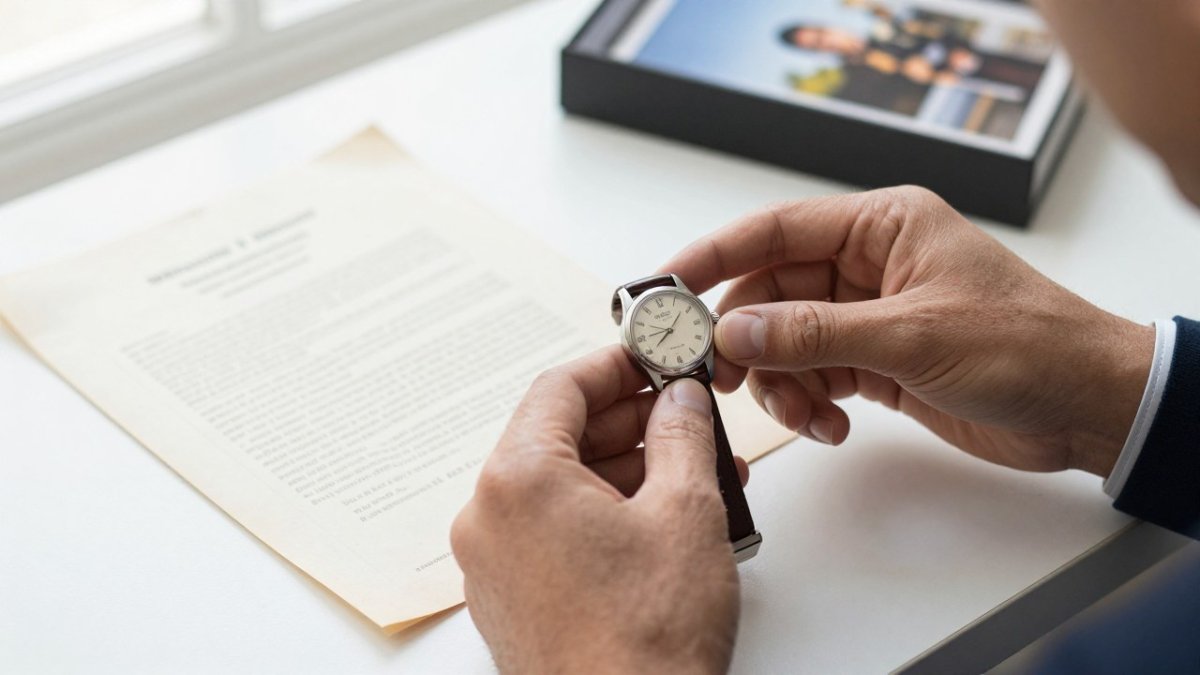
- Original box, papers, and warranty card
- Purchase receipts, invoices, or insurance schedules
- Service records and any workshop invoices
Having these to hand gives the appraiser the evidence needed to confirm authenticity and condition. Missing papers do not prevent a valuation, but they can make the figure less certain.
Luxury Watch Resale Value and Why It Can Differ From an Estate Valuation
A resale figure is often lower than the valuation you receive for estate purposes, and this surprises many families. Resale value reflects what a buyer will actually pay after dealer margins, selling fees, and the time a piece may sit on the market.
For this reason, an estate valuation records a documented opinion of worth on a specific date, while the resale price depends on the market at the moment of sale.
Booking a Valuation for Your Estate Watches
If you are preparing an estate inventory and need reliable valuations for your watches, book a valuation of your estate watches with Gemmological Valuations of Australia. Our senior appraiser, Con Pappas, has over 50 years of experience, and we are a founding member of the National Council of Jewellery Valuers. You can contact our team to discuss which valuation basis suits your situation and what documents to bring.
Frequently Asked Questions
How are luxury watches valued for estate planning?
Estate valuations are usually prepared by a qualified independent appraiser who assesses the watch's brand, model reference, age, materials, condition and documentation. The appraiser then identifies comparable sales and current market conditions to arrive at a value on a stated valuation date. The report should state the valuation basis used, so executors and beneficiaries know exactly what the figure represents and can apply it consistently across the estate.
What is the difference between a watch appraisal and a watch valuation?
The terms are often used interchangeably, but an appraisal is generally the broader professional assessment that includes examining the watch, verifying authenticity and documenting its condition. A valuation is the monetary conclusion reached from that assessment. For estate purposes, you usually need a written appraisal that supports a stated value, so ask for both the assessment and the valuation figure in the one report.
Which valuation basis is appropriate for an estate?
The right basis depends on the purpose. Insurance replacement value reflects the cost to buy a comparable watch today, while fair market value reflects the price a willing buyer and seller would agree on. Estate work often calls for a clearly defined basis set out in the instructions to the appraiser. Confirm with the executor or legal adviser which basis is required before the valuation is commissioned.
What documents should be provided with a luxury watch valuation?
Provide original papers, the box, warranty cards, service records, receipts or invoices, and any previous appraisal certificates. Record the serial number and model reference. Photographs of the watch from several angles help document condition. Complete documentation supports authenticity and provenance, and it can speed up both the valuation and any later insurance or probate process.
How do condition, provenance and original packaging affect a watch's value?
Condition is one of the most significant factors, covering both mechanical state and cosmetic wear such as case polish and dial marks. Provenance, meaning a documented ownership history, can add confidence and value. Original packaging and papers often increase the value of a complete set compared with a watch alone, although the effect varies by brand and model.
How often should a luxury watch valuation be updated?
There is no fixed schedule. Valuations reflect a specific date, and watch markets can move considerably over time. Many owners review insured values periodically, and an estate valuation is generally tied to the date of death or the date specified in the instructions. If the watch is serviced, altered or the market shifts significantly, an updated valuation may be worthwhile.
Can an estate valuation differ from the price a watch sells for?
Yes. An estate valuation states a value on a particular basis and date, while a sale price depends on the buyer, the channel, negotiation and current demand. Auction results and dealer offers may differ from the appraised figure. Understanding this gap helps executors explain the valuation to beneficiaries and avoid unrealistic expectations about the final sale.
Should each watch in a collection be valued separately?
Generally, yes. Each watch has its own brand, model, age, condition and documentation, which all affect its value. Listing each item separately makes the estate inventory clearer and supports fair distribution among beneficiaries. A collective figure can be provided as a summary, but individual valuations give a more defensible basis for probate and insurance purposes.
Estate valuations are often time-sensitive, so arranging an appraisal early helps the executor meet their timelines. Contact Gemmological Valuations of Australia to request a written valuation for your watches, and bring any papers you have to make the process faster and more precise.