 Ultimate guide
Understanding Jewellery Valuation Documentation
Table of Contents
- What a Jewellery Valuation Report Actually Contains
- Jewellery Insurance Replacement Value vs. Market Value
- What to Look for in a Jewellery Valuation Report
- How to Choose a Qualified Independent Valuer
- The Valuation Process: From Assessment to Document
- How Often to Get Jewellery Valued
- Digital vs. Physical Records and Estate Planning
- Conclusion: Keeping Your Documentation Current
- Frequently Asked Questions
Last Updated: September 9, 2026
A jewellery valuation is a formal document that records a piece's identity, condition, and estimated worth, prepared by a qualified professional for a specific purpose such as insurance or estate planning. Understanding jewellery valuation documentation matters because this single sheet of paper determines how much you receive from an insurer, how an estate is divided, or whether a sale price is fair. At Gemmological Valuations of Australia, our senior appraiser brings over 50 years of industry experience to every report, ensuring the documentation is precise and defensible. Below, we will show you exactly what a proper valuation should contain, how to read the figures, and how often you should refresh the document to keep your coverage accurate.
What a Jewellery Valuation Report Actually Contains
A professional valuation report is far more than a price on a letterhead. It is a structured document built on technical observation and commercial judgement, and every section exists to protect you if the piece is lost, stolen, or disputed.
The core of the report is the item description. This covers the piece's type, maker or designer, and provenance where known. It then moves into gemstone specifications: carat weight, clarity grade, cut quality, and colour, assessed through proper gemmology. For metal, the report records metal purity, hallmarks, and setting style. Crucially, a strong report distinguishes between a technical observation, what the stone and metal objectively are, and a commercial judgement, what they are worth in today's market.
Jewellery Insurance Replacement Value vs. Market Value
The single most misunderstood figure in any jewellery valuation is the difference between insurance replacement value and market value. The insurance replacement value is the retail replacement value: what it would cost today to buy a comparable new piece from a retailer, including GST and retail margin. Market value, by contrast, is what a willing buyer would pay a private seller, which is typically lower.
Your insurance policy needs the retail replacement figure. If you insure a ring for its market value and it is stolen, your payout may not cover the cost of walking into a shop and replacing it. This is the replacement value trap that catches many owners at claim time.
The 'Replacement Value' Trap in Practice
The trap is not just about choosing the wrong number; it is about misunderstanding what the number means at the moment of a claim. Consider a diamond ring purchased five years ago for $5,000. Its market value today might be $4,000, reflecting the second-hand market. However, the cost to replace it with a new ring of equivalent quality from a jeweller could be $7,000, due to inflation and rising diamond prices. If you insured the ring for its market value, your insurer would only pay out $4,000, leaving you $3,000 short of the actual cost to replace it.
Conversely, insuring for an inflated amount, such as the original retail price of a piece that has since depreciated, is also a mistake. While you may pay higher premiums, the insurer will only pay out the actual replacement cost at the time of the claim, not the sum insured, if it is deemed to be above the true replacement value. The goal is to have a valuation that accurately reflects the current retail replacement cost.
How Insurers Use the Valuation
It is important to understand that the valuation document is the primary evidence your insurer uses to calculate a payout. They do not take your word for what a piece is worth. The valuation provides the specification and the basis of value, which the insurer's assessor will use to source a comparable replacement. If your valuation is vague, outdated, or uses the wrong basis of value, you give the insurer room to offer a lower settlement.
A robust insurance valuation will explicitly state that it is for "insurance replacement purposes" and will include a detailed description that allows a jeweller to source an exact or near-identical match. This is why a generic valuation that simply states "diamond ring, $10,000" is almost worthless in a claim scenario. The insurer cannot verify the quality of the stone or the workmanship, and will likely default to the lowest possible interpretation.
The Role of a 'Forced Sale' Value
Another figure that sometimes appears in valuations is the 'forced sale' or 'auction' value. This represents the price a piece would likely achieve at a quick public auction, which is often significantly lower than both market and replacement values. This figure is not used for standard insurance policies but is relevant for estate planning or when liquidating assets quickly. Understanding these three distinct values, replacement, market, and forced sale, is essential for making informed decisions about insurance coverage and financial planning.
What to Look for in a Jewellery Valuation Report
When you receive your jewellery valuation report, check it against a clear standard before you file it away. A credible report should identify the valuer by name and qualifications, state the purpose of the valuation, and carry a date. It should include clear photographs and a full written item description covering gemmology details and craftsmanship.
The report should also state the valuation methodology used and the basis of value, such as insurance replacement or market value. Look for a statement of the valuer's independence, confirming they are not the seller of the piece. Finally, the document should note its own limitations, such as whether the piece was assessed in its setting or removed for full gemstone grading.
How to Choose a Qualified Independent Valuer
Choosing a valuer is the most important decision in the entire process, because the quality of your documentation depends entirely on their expertise. The key is to seek a qualified professional who is independent, meaning they have no financial interest in selling you jewellery, and who holds recognised credentials.
A credible indicator in this field is membership of a professional body such as the National Council of Jewellery Valuers. An independent valuer with formal gemmology training and documented experience will produce a report that is generally well-regarded by insurers, courts, and estate lawyers. This is where a practitioner like Con Pappas, a founding member of the National Council of Jewellery Valuers, brings genuine authority, as his credentials are verifiable and his reports are built on decades of technical observation.
The Valuation Process: From Assessment to Document
The valuation process is often opaque to the public, but knowing what happens at each stage helps you prepare and ensures you receive a document that truly reflects your piece. A professional valuation is not a single moment of appraisal; it is a structured sequence of technical and commercial steps.
Stage 1: The Initial Consultation and Documentation
Before the physical inspection, a professional valuer will ask about the piece's history. Be ready to provide any provenance you have, such as original receipts, certificates from gemmological laboratories (like the Gemological Institute of America or the Australian Gemmological Institute), or previous valuations. This information is not just background; it helps the valuer identify the piece and can significantly influence its value, particularly for designer or antique items.
Stage 2: The Physical Inspection and Gemmological Analysis
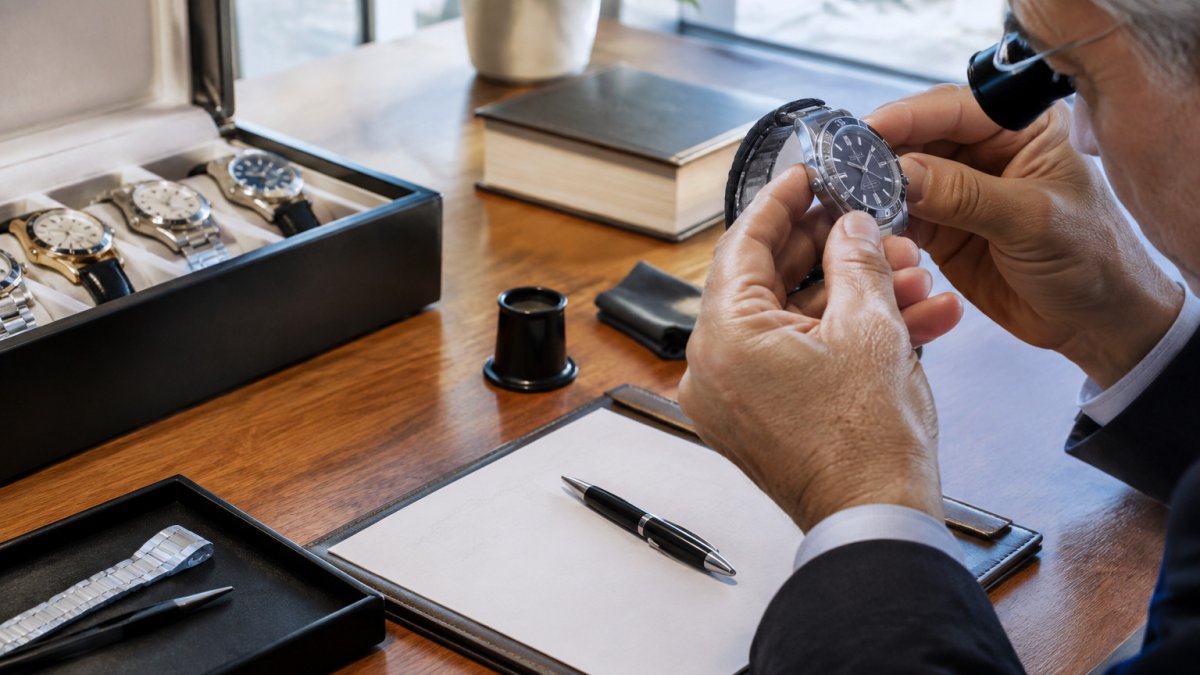
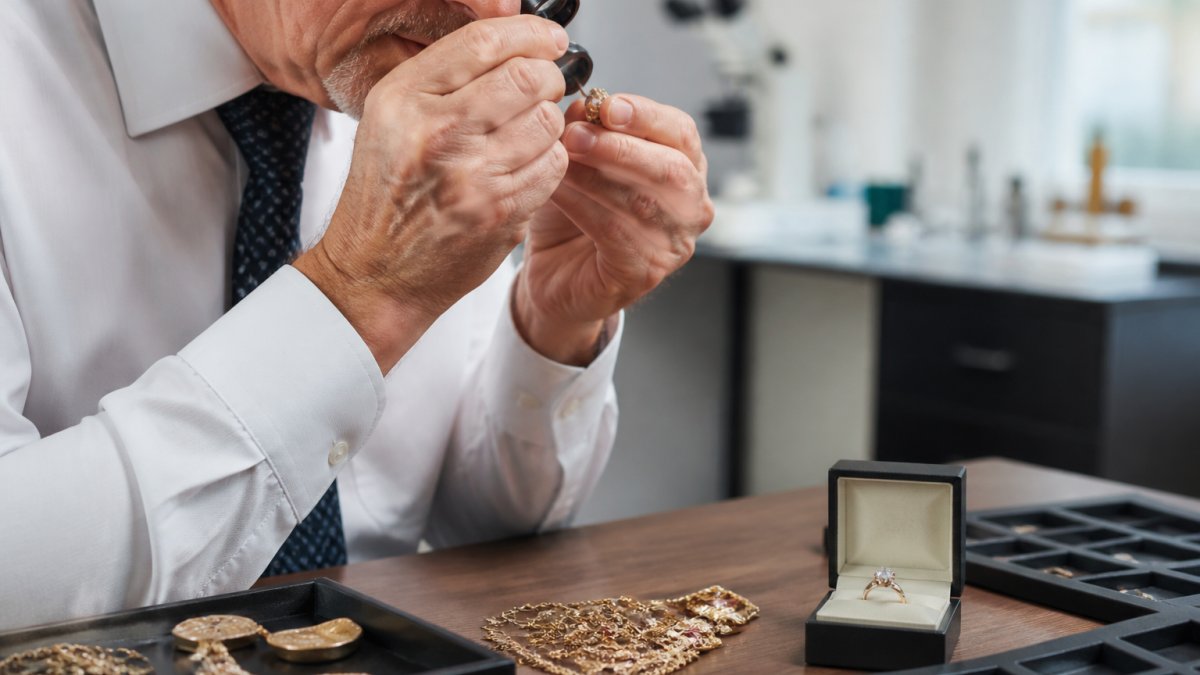
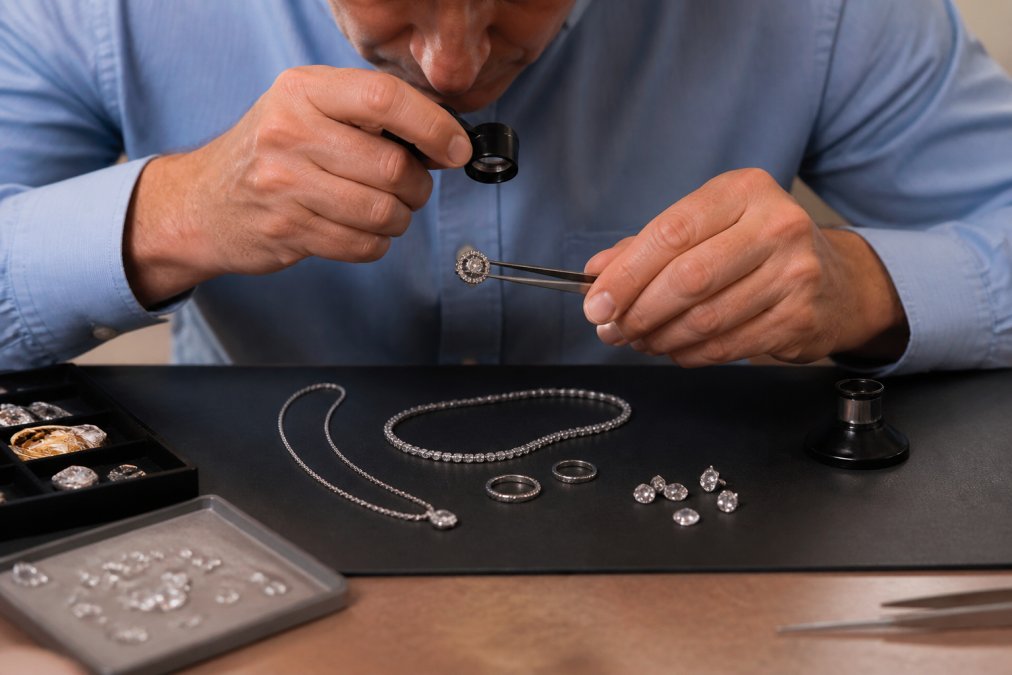
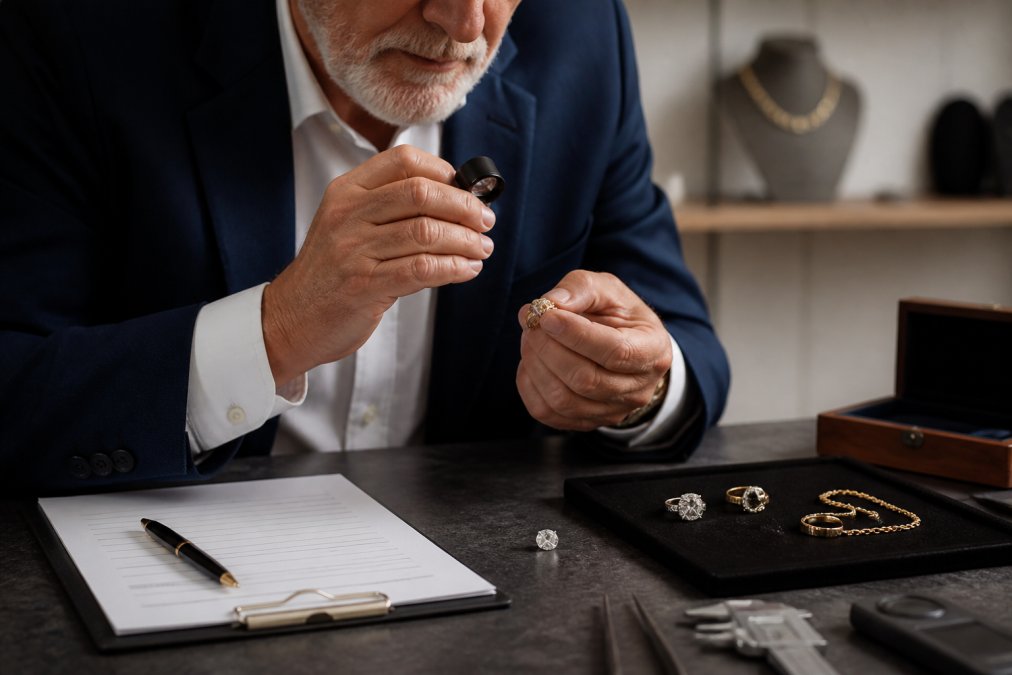
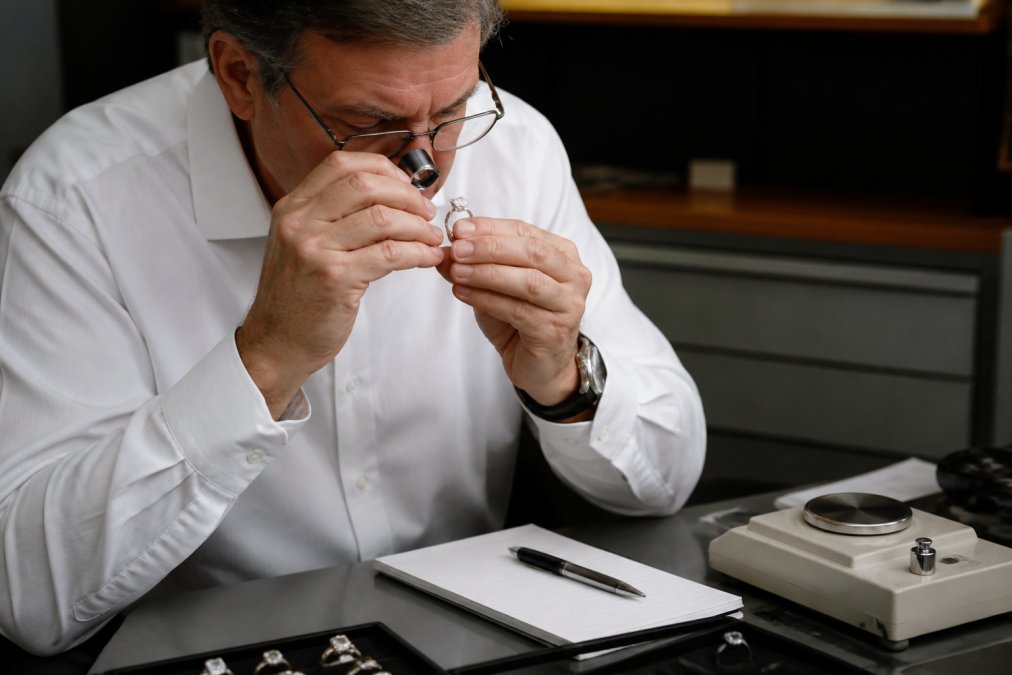
This is the core of the process. The valuer will examine the piece under controlled lighting and with magnification. For mounted stones, they use a loupe or microscope to assess the "Four Cs", carat weight, colour, clarity, and cut (gia.edu). They will also test the metal's purity and check hallmarks. A key point of difference between a basic and a thorough valuation is whether the valuer removes the stone from its setting to weigh and grade it. This is a more invasive and time-consuming process, but it provides a far more accurate and defensible assessment. The valuer will also note any signs of wear, damage, or previous repairs, as these directly impact the piece's condition and value.
Stage 3: Market Analysis and Valuation Methodology
Once the physical characteristics are recorded, the valuer shifts from technical observation to commercial judgement. They analyse the current market to determine the appropriate value. This is not a single number but a range that depends on the purpose of the valuation. For an insurance replacement value, they research current retail prices for a comparable new item. For a market value, they look at recent auction results and private sale prices. A skilled valuer will draw on both their own market experience and up-to-date data sources to arrive at a defensible figure.
Stage 4: Drafting and Certification
The final stage is the creation of the valuation certificate. This is where the valuer synthesises their findings into a formal, legally defensible document. It must be meticulously checked to ensure every technical detail and commercial figure is accurate. The valuer then signs and dates the document, and it is typically produced on paper. A thorough process, especially for a complex piece, can take time to complete, as it involves research and careful drafting, not just the time spent at the bench.
Documents to Prepare for Your Valuer
To streamline the process, gather the following before your appointment:
- Original purchase receipts or invoices
- Any existing valuation certificates
- Laboratory reports for major gemstones (e.g., GIA, AGSL, GAA)
- Provenance or historical documentation for antique or designer pieces
- Your insurance policy schedule, so the valuer can ensure the new valuation aligns with your coverage requirements
Providing this information allows the valuer to focus on the physical assessment and market analysis, rather than spending time on basic research, which can also make the process more efficient.
How Often to Get Jewellery Valued
Jewellery valuations do not stay accurate forever, which is why periodic review is essential. Most insurers and valuers recommend having your pieces reassessed every two to three years, because precious metals and gemstone prices fluctuate with market conditions (jewellersacademy.com).
You should also update your valuation documentation after any significant change: a new setting, a resized ring, a repaired clasp, or the acquisition of a new piece. Insurance policies often require an up-to-date valuation to maintain coverage, so failing to refresh the document can leave you underinsured at claim time. A quick check of your policy wording will tell you how frequently your insurer expects a current valuation on file.
Digital vs. Physical Records and Estate Planning
Modern jewellery valuation documentation raises an important question: should you keep physical copies or digital ones? The answer for most owners is both. A physical certificate is useful for immediate reference and is often requested by insurers, while a digital scan ensures you have a backup if the original is lost or damaged in a house fire or theft.
This matters most for estate planning and probate. When a piece forms part of an estate, the executor needs formal, court-ready documentation that establishes value for distribution. A digital record is convenient, but probate processes may require the original signed document. If you are planning an estate, keep the physical certificate with your will or in a secure location, and inform your executor where it is. This single step prevents significant delays when the estate is being settled.
Conclusion: Keeping Your Documentation Current
Owning fine jewellery is a financial safeguard as much as a pleasure, and that safeguard only holds if your valuation documentation is accurate, current, and professionally prepared. A report built on sound gemmology, clear methodology, and an independent valuer's judgement protects you at claim time, during estate settlement, and when you decide to sell. At Gemmological Valuations of Australia, our reports are precise and well-documented, and your treasured items are handled with care, whether you need an insurance appraisal, an estate valuation, or peace of mind. Contact us to ensure your jewellery is protected by documentation that truly reflects its value.
Frequently Asked Questions
What is a certificate of valuation for jewellery?
A certificate of valuation, or valuation report, is a formal document prepared by a qualified valuer. It provides a detailed description of your jewellery, including gemstone specifications, metal purity, and hallmarks, along with a professional opinion of its current market value. This document is essential for insurance purposes, estate planning, or a private sale, as it serves as official proof of an item's value and condition at a specific point in time.
How does an insurance replacement value differ from market value?
Insurance replacement value is the estimated cost to replace your item with a similar one at current retail prices. Market value is what a willing buyer would pay a seller, which is often lower. Your insurance policy needs the replacement value to ensure you are adequately covered. A qualified valuer will state the valuation methodology used and clarify which value applies to your report.
How often should you update your jewellery valuation documentation?
Most insurers and industry bodies recommend updating your jewellery valuation every two to three years. The price of precious metals and gemstones fluctuates, and a report that is five years old may not reflect current replacement costs. If you have significant changes in the market or modify the piece, you should have it revalued sooner. A periodic review ensures your insurance coverage remains a financial safeguard.
What is the difference between a jewellery appraisal and a valuation certificate?
An appraisal is a broad term for the process of evaluating an item, which can be for various purposes. A valuation certificate, or valuation report, is the formal, documented output of that process. It is a comprehensive record that includes a full item description, technical observations, and commercial judgement. In practice, for insurance or legal purposes, you need the formal document, not just a verbal opinion.
Why is an NCJV-recognised valuer important for documentation?
An NCJV-recognised valuer has met the professional standards of the National Council of Jewellery Valuers. This recognition assures you that the report is prepared by someone with verified qualifications and experience in gemmology. These reports are generally well-regarded by insurance companies and legal professionals because they are thorough, accurate, and follow a consistent valuation methodology, making them reliable for insurance or estate purposes.