 Comparison
Is a Lab-Grown Diamond Appraisal Worth the Cost?
Quick Summary
A lab-grown diamond appraisal is worth the cost when the stone's replacement value is high enough that an error would matter, or when a third party such as an insurer or estate needs an independent figure. Compare the appraisal fee with the financial exposure it removes before booking. An appraisal states replacement value, not the price you would get on resale.
- An appraisal gives replacement value or insurance value, not a guaranteed resale price.
- Get a written fee quote and compare it with the gap between your insured value and replacement cost.
- If the fee is several times smaller than your exposure, the appraisal is usually justified.
- Insurers generally pay the cost of replacing the item, not the figure on the certificate.
- Reappraise when your policy renews, prices move, the piece is repaired, or ownership changes.
Table of Contents
- What a Lab-Grown Diamond Appraisal Actually Tells You
- When an Appraisal Is Worth Paying For
- Lab-Grown Diamond Insurance Appraisal: What Insurers Ask For
- Diamond Appraisal vs Grading Report: Which Do You Need?
- Why Lab-Grown Diamond Resale Value Is Usually Lower Than the Appraisal
- What to Bring to a Jewellery Appraisal
- Booking Your Lab-Grown Diamond Appraisal
- Frequently Asked Questions
Is a Lab-Grown Diamond Appraisal Worth the Cost?
Last Updated: October 27, 2026
What a Lab-Grown Diamond Appraisal Actually Tells You
The first question most owners ask is what the document actually does.
That last point matters more than most people expect. The figure on an appraisal is a replacement value or an insurance value, not a price you will receive if you sell the diamond. Australian Competition and Consumer Commission guidance on jewellery and gemstone pricing reflects the same principle that retail sellers generally recognise: what a stone costs to replace is not the same as what it would fetch in a resale market.
An appraisal can answer several practical questions:
- What it would cost to buy an equivalent stone today
- Whether the stone matches the quality described on a sales receipt
- What value to declare for insurance or estate purposes
It cannot promise a resale price, and it cannot make a lab-grown stone worth more than the market will pay. Readers should judge an appraisal by how well it serves the purpose they need it for.
When an Appraisal Is Worth Paying For
An appraisal is worth the cost when the stone's replacement value is high enough that an error would matter, or when a third party needs an independent figure. Most people reach that point for one of three reasons: insurance cover, estate administration, or a dispute over value. The useful question is not whether appraisals are good in principle, but whether the fee is small relative to the financial exposure the document removes.
A practical way to decide is to run a simple cost-versus-benefit comparison before you book.
- Establish the replacement value. Use the purchase receipt, a grading report and current retail listings for comparable stones to estimate what an equivalent piece would cost to buy today.
- Establish the appraisal fee. Ask for a written quote. Fees are commonly charged as a flat rate per item or as an hourly rate, and they vary with the complexity of the piece, the number of stones and whether a grading report already exists. Get the figure in writing before you commit.
- Compare the fee with the exposure. If the piece is uninsured or under-insured, the exposure is the gap between what you would claim and what replacement actually costs. If that gap is several times the appraisal fee, the appraisal is usually justified. If the fee is a large fraction of the item's value, it usually is not.
There are also situations where the fee buys something other than insurance protection:
- Estate administration. Executors and beneficiaries often need an independent figure to divide assets or satisfy a trustee's duty. A written valuation is difficult to replace with a receipt alone.
- A dispute over value. If a seller, buyer or insurer disputes what a stone is worth, an independent appraisal is the document that settles the argument.
- Peace of mind on a significant purchase. If you have spent a substantial sum and want confirmation that the stone matches its description, an appraisal can catch a mismatch while you still have recourse.
The decision should rest on that comparison, not on a general belief that appraisals are either always necessary or always a waste.
Lab-Grown Diamond Insurance Appraisal: What Insurers Ask For
Insurance rules differ between providers, so check your policy wording before you commission a valuation. Some policies require an appraisal for items above a set sum. Others accept a receipt plus a grading report. Insurance Council of Australia guidance on valuing personal items is a useful starting point for understanding how insurers approach personal property.
How the appraisal affects a claim
The appraisal matters most at the point of loss. When you claim, the insurer's obligation is usually to indemnify you, that is, to put you back in the position you were in before the loss, subject to the sum insured and the policy terms. In practice this means the insurer will typically arrange or authorise replacement with an equivalent item, or pay an amount based on the cost of that replacement, rather than handing over the figure printed on your certificate.
That has two consequences worth understanding before you buy cover:
- The sum insured should reflect replacement cost, not purchase price. If lab-grown prices have fallen since you bought the stone, insuring for the original price may leave you paying premiums on a figure higher than replacement actually costs. If prices have risen, or the setting has become more expensive to reproduce, insuring for the old figure may leave you short.
- The appraisal is evidence, not a guarantee of payout. The insurer will still apply the policy terms, any excess, and its own assessment of an equivalent replacement. A clear, recent, well-documented appraisal makes that assessment straightforward; a vague or outdated one invites delay and dispute.
Timing and reappraisal
Most insurers expect the valuation to be updated periodically. A figure from several years ago may no longer reflect replacement cost, so ask your insurer how often it wants a fresh report. As a working rule, obtain an initial appraisal when you first insure a significant piece, and commission a new one when:
- the policy comes up for renewal and the existing valuation is several years old;
- lab-grown prices have moved noticeably since the last valuation;
- the piece has been altered, reset or repaired;
- ownership changes through inheritance, gift or estate administration; or
- your insurer changes its requirements or sum-insured thresholds.
If you are unsure whether your current cover is adequate, ask your insurer two questions in writing: what documentation it requires for a lab-grown diamond, and how often it expects the valuation to be refreshed. The answers determine both the appraisal you need and when you next need one.
Diamond Appraisal vs Grading Report: Which Do You Need?
A grading report and an appraisal serve different purposes, and many buyers confuse them. A grading report, issued by a laboratory, describes the stone: its carat weight, colour, clarity, cut and whether it has been treated. It does not assign a monetary value.
An appraisal goes a step further. It takes the description and applies a value for a specific purpose. In practice, you usually need both. The grading report establishes what the stone is, and the appraisal establishes what it is worth for insurance or estate purposes.
Why Lab-Grown Diamond Resale Value Is Usually Lower Than the Appraisal
This is the point most likely to disappoint owners. Lab-grown diamonds have fallen sharply in price as production has grown, and the resale market for them is thin. Retailers often buy back stones at a fraction of their replacement value, if they buy them back at all.
The gap between appraisal value and resale value is therefore large. An appraisal stating a stone's replacement value at a given figure does not mean you can sell it for that amount. Gemological Institute of America research on lab-grown diamond pricing describes how wholesale prices for lab-grown stones have moved, and the trend supports this caution.
Owners who buy a lab-grown diamond expecting to recover its cost on resale are usually disappointed. Treat the stone as a consumer good whose value is best protected through insurance and documentation rather than investment.
What to Bring to a Jewellery Appraisal
Bring everything you have that describes the piece:
- The original sales receipt or invoice
- Any grading report or certificate, with its number
- Photographs of the piece from several angles
- Details of any engraving, setting or repairs
- Written details of the age and origin of the piece, if known
For inherited items, bring any family records or previous valuations.
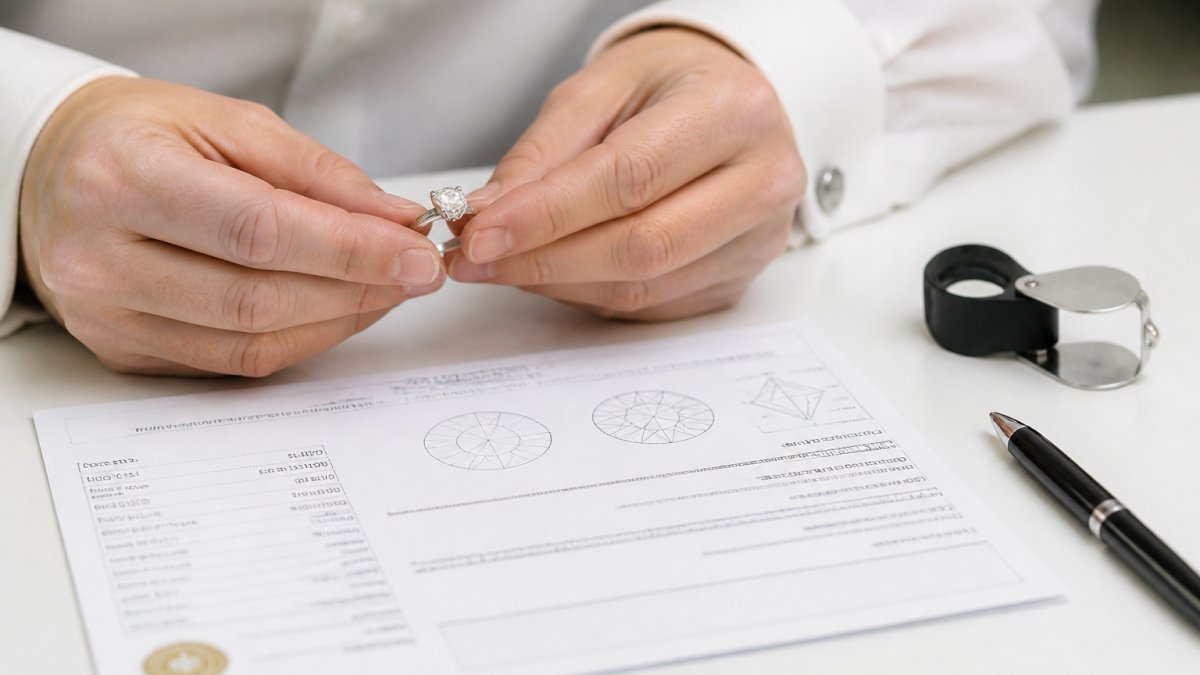
Booking Your Lab-Grown Diamond Appraisal
If you have worked through the questions above and decided an appraisal is justified, the next step is to contact the team. Gemmological Valuations of Australia is led by senior appraiser Con Pappas, who has more than 50 years of experience. You can review what the service includes on the Jewellery Valuation Experts page, or contact the team to ask a question before committing.
Frequently Asked Questions
Do lab-grown diamonds retain value?
An appraisal value is not necessarily the amount a buyer would pay you for a diamond. It should not be treated as a guide to what the stone will fetch if sold.
Do I need an appraisal to insure a lab-grown diamond?
Check your policy wording with your insurer before seeking an appraisal, because requirements differ between companies.
What is the difference between a diamond grading report and an appraisal?
A grading report describes a stone's physical characteristics, such as carat weight, colour, clarity and cut, and identifies it as lab-grown or natural. An appraisal goes further by assigning a monetary value for a stated purpose, such as insurance replacement or estate distribution. A grading report on its own does not tell you what the diamond is worth. Many owners need both: the report to identify the stone, and the appraisal to put a value on it.
How often should jewellery be reappraised?
Check with your insurer whether it requires an updated report.
Can a lab-grown diamond be appraised if I do not have its grading report?
Bring any purchase receipts or certificates you have.