 Comparison
Valuation Centre Australia Alternative: 2026 Comparison
Table of Contents
- What a Valuation Centre Actually Does
- Quick Comparison: Valuation Centre Australia Alternatives
- NCJV Registered Valuers: What the Credential Means
- How to Read a Jewellery Valuation Certificate
- Insurance Valuation Requirements in Australia
- Jewellery Valuation Cost Guide: What Drives the Fee
- Red Flags: When to Walk Away From a Valuer
- Frequently Asked Questions
Last Updated: September 14, 2026
What a Valuation Centre Actually Does
A valuation centre is a business that assesses the worth of an item and issues a written report, usually for insurance, estate or resale purposes (Valuation and Assessment). For jewellery and watches, that report needs to stand up to scrutiny from insurers, solicitors and executors. This guide from Gemmological Valuations of Australia compares the main options for a valuation centre australia-based buyer, so you can choose a service that fits the job in front of you.
The core work is straightforward to describe and hard to do well. A valuer identifies the item, grades any stones, assesses the metal, researches current replacement costs, and documents the result. Skip any one of those steps and the report is worth less than the paper it is printed on.
Below, we break down what each type of provider offers, where they fall short, and how to spot a report that will not survive a claim.
Quick Comparison: Valuation Centre Australia Alternatives
The best provider depends on what you own. Jewellery and watch specialists suit fine pieces; property valuers suit real estate; data platforms suit quick estimates. The table below maps each option against the four criteria that actually determine whether a report will be accepted by an insurer, solicitor or executor.
| Provider Type | Best For | Report Style | Independence | Watch Out For |
|---|---|---|---|---|
| Specialist gemmological valuer | Fine jewellery, watches, estates | Detailed, itemised, photo-documented | Usually independent of retail | Requires physical inspection |
| Independent valuation firm | Insurance and estate work | Comprehensive, unbiased | Independent | Appointment needed |
| Regional jewellery valuer | Retail and trade clients | Insurance and replacement value | May also sell jewellery | Limited service area |
| Property valuation firm | Real estate only | Bank-grade property reports | Independent | Does not assess jewellery |
| Automated data platform | Quick property estimates | Instant digital estimate | N/A | No physical inspection |
How to Compare Valuation Providers: A Vetting Checklist
Most comparison tables stop at 'what they do'. The harder question is whether a given provider will produce a report that survives a claim. Work through this checklist before you book:
- Accreditation. Ask for the valuer's NCJV membership number and verify it with the council. A genuine member will supply it without hesitation.
- Independence. Confirm the valuer does not also sell jewellery. A valuer who profits from a replacement sale has a conflict of interest.
- Scope of expertise. A property valuer cannot assess a diamond ring; an automated platform cannot inspect a watch movement. Match the provider to the item.
- Documentation standard. Ask to see a sample report. It should itemise each stone, photograph the piece, and state the valuation purpose.
- Insurance acceptance. Ask the provider which insurers routinely accept their reports. A report your insurer rejects is worthless.
- Professional indemnity insurance. Confirm the valuer holds current cover. This protects you if the valuation is later challenged.
- Turnaround and process. Ask whether the item is inspected in person, how long the report takes, and what happens if you dispute the figure.
How This Comparison Was Built
We assessed each option on four criteria: scope of expertise, independence from retail sales, documentation quality, and suitability for insurance or estate use. A property valuer will never assess a diamond ring, and an automated platform will never handle a watch. That distinction matters more than any marketing claim.
NCJV Registered Valuers: What the Credential Means
NCJV registered valuers are members of the National Council of Jewellery Valuers who have met the council's assessment standards for gemmological knowledge and valuation practice (Find A Valuer). The credential signals a baseline of competence, not a guarantee of quality.
Membership requires demonstrated expertise in gemstone identification, diamond grading and valuation methodology. It also commits the valuer to a code of conduct and ongoing professional development.
At Gemmological Valuations of Australia, our senior appraiser Con Pappas is a founding member of the NCJV (No. 085) and brings over 50 years of industry experience to every assessment. When you are checking any valuer's credentials, ask for their NCJV number and verify it directly with the council. Industry accreditation is one of the few objective signals available to a consumer.
How to Read a Jewellery Valuation Certificate
A jewellery valuation certificate should state the item's description, the metal and its purity, stone details including carat weight and grading, the valuation figure, the purpose of the valuation, and the valuer's credentials and signature (Valuation and Assessment). If any of those elements is missing, the certificate is incomplete.
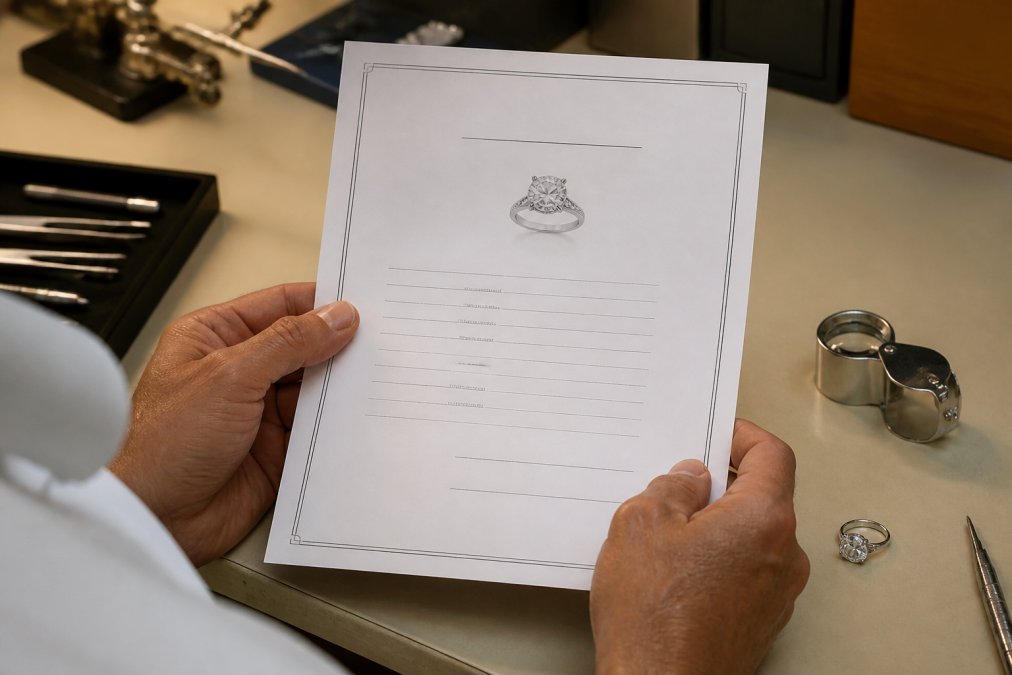
Read the "purpose" line first. An insurance replacement valuation is not the same as a fair market value assessment for an estate. The figure will differ, and using the wrong one can leave you underinsured or overstating an estate.
Check that the report identifies stones individually rather than as a lump description. A certificate that says "diamond ring" without carat, colour, clarity and cut detail tells an insurer almost nothing.
Insurance Valuation Requirements in Australia
Most insurers require a valuation that reflects the full retail replacement cost of the item, not its secondhand or resale value. The report should be current, itemised, and issued by an independent valuer with verifiable credentials.
Requirements vary between insurers and policies, so confirm the specifics with your provider before booking. As a general rule, insurers want:
- A description detailed enough to identify the item if it is lost or stolen
- A replacement figure based on current retail pricing
- Photographs of the item
- The valuer's name, credentials and signature
- A date of issue
For high-value pieces, some insurers also want the valuation reviewed periodically, since precious metals and gemstone markets move. Ask your insurer how often they expect an update.
Jewellery Valuation Cost Guide: What Drives the Fee
Jewellery valuation pricing depends on the number of items, the complexity of each piece, the documentation required, and whether the work is for insurance, estate or legal purposes. There is no single standard fee, and any provider quoting a flat rate without seeing the items is guessing.
The main drivers are:
- Item count. A single ring takes less time than a full estate collection. Most valuers price per item, with a lower rate for additional pieces in the same booking.
- Stone complexity. Coloured gemstones and diamonds with detailed grading take longer than plain metal. A piece with multiple stones or a large centre stone will attract a higher fee than a simple band.
- Report depth. A court-ready estate report requires more documentation than a basic insurance schedule. Legal and probate work typically carries a premium because the report must withstand scrutiny.
- Turnaround. Urgent work often carries a premium. Standard turnaround is usually several business days; same-day or next-day service costs more.
- Travel or courier. If the valuer must travel to you, or you must courier the item, those costs are usually passed on.
How Fees Are Usually Structured
Most independent valuers work on one of three models:
- Per-item fee. A set amount for each piece, often tiered by value band. This is the most common model for jewellery and watches.
- Hourly rate. Used for complex estates or where the scope is unclear until inspection.
- Flat project fee. Quoted after the valuer has seen the items, usually for a defined collection or estate.
A common pattern is a minimum charge for a single item, with a reduced per-item rate once you book several pieces together. If you are valuing a full estate, ask whether a collection rate applies.
What to Ask Before You Commit
Because fees vary so widely, ask for a written quote based on your actual items. A quote should state:
- The fee per item or the total project fee
- What the report will include (photographs, stone-by-stone detail, purpose statement)
- The expected turnaround
- Whether the fee changes if the item turns out to be more complex than described
- Whether the valuer carries professional indemnity insurance
Gemmological Valuations of Australia provides quotes on request through its contact page, so you know the cost before any work begins.
Red Flags: When to Walk Away From a Valuer
Walk away if a valuer also sells jewellery and values your item at a figure that pushes you toward buying a replacement from them. Independence is the whole point of a valuation.
Other warning signs:
- No verifiable industry accreditation or membership number
- A report with no photographs or item-level detail
- Pressure to accept a verbal figure without documentation
- Refusal to explain the valuation methodology
- No professional indemnity insurance
- A figure that seems wildly above or below the current market
The last one cuts both ways. An inflated insurance valuation feels flattering, but you will pay higher premiums for cover you cannot claim against, because the insurer will only pay the true replacement cost.
Choosing the wrong valuation provider costs you more than the fee. An incomplete report gets rejected by your insurer, delays an estate settlement, or leaves you underinsured when a claim finally comes. Gemmological Valuations of Australia handles jewellery and watch appraisals with the documentation insurers, solicitors and executors actually accept, backed by a founding NCJV membership and more than 50 years of hands-on experience. Contact Gemmological Valuations of Australia to discuss your pieces and get a quote before you commit.
Frequently Asked Questions
What qualifications should a professional jewellery valuer hold?
Look for membership of a recognised industry body such as the National Council of Jewellery Valuers, plus formal gemmological training in diamond grading and coloured stone identification. A valuer should also carry professional indemnity insurance so the report stands behind its figures. Ask to see membership numbers and confirm them directly with the issuing body before you hand over any items.
Are online jewellery valuations reliable for insurance purposes?
Online estimates based on photos cannot verify gemstone identity, treatments, or metal purity, so they rarely satisfy insurance valuation requirements. A proper report needs physical inspection with gemmological equipment. Use online tools for a rough idea only, then book an in-person assessment before relying on any figure for cover, estate distribution, or resale.
How often should I have my jewellery re-valued?
Most insurers expect an updated valuation every two to three years, because precious metal and diamond prices move with market fluctuations. Re-value sooner if you inherit a piece, alter a setting, or notice a significant shift in gold or gemstone prices. Check your policy wording, as some insurers set their own review intervals.
What is the difference between a retail valuation and a market value appraisal?
A retail replacement value reflects what it would cost to buy an equivalent new piece from a retail store, which is the figure insurers normally want. A fair market value appraisal estimates what the item would fetch in a private sale or estate liquidation, which is usually lower. Tell your valuer the purpose up front so the report uses the right basis.
How do I verify the credentials of a jewellery appraiser?
Ask for the valuer's name, membership number, and the body they belong to, then check that register directly. A founding or long-standing member of a national valuers' council, with decades of hands-on gemmological work, gives you a verifiable paper trail. Also confirm they hold current professional indemnity insurance and can show sample reports.