 blog
Is a Formal Jewellery Appraisal Worth It for Small Estates?
Last Updated: November 12, 2026
Quick Summary
A formal jewellery appraisal is worth it when the written report will be relied on by someone else, such as a solicitor, court, insurer, buyer or beneficiary. For a small estate with modest pieces and no dispute, an informal opinion plus photographs and notes is often enough. Check any legal or probate requirement first.
- A formal report is usually justified when a solicitor, court or probate registry asks for a value at date of death.
- Commission a signed, itemised report if beneficiaries disagree about what the pieces are worth.
- Start by photographing each piece, noting hallmarks and keeping receipts or previous valuations.
- Confirm in writing whether a quoted fee includes the written report, photographs and testing.
- Insurance valuations and probate valuations answer different questions and can produce different figures.
Table of Contents
- What a Formal Jewellery Appraisal Actually Involves
- Formal Jewellery Appraisal vs Estimate: What Separates Them
- How to Value Inherited Jewellery Before You Decide
- Small Estate Cost-Versus-Benefit Test
- When Probate Requires a Jewellery Valuation
- When an Insurance Valuation Is Enough and When It Isn't
- Choosing Your Next Step for the Estate's Jewellery
- Frequently Asked Questions
What a Formal Jewellery Appraisal Actually Involves
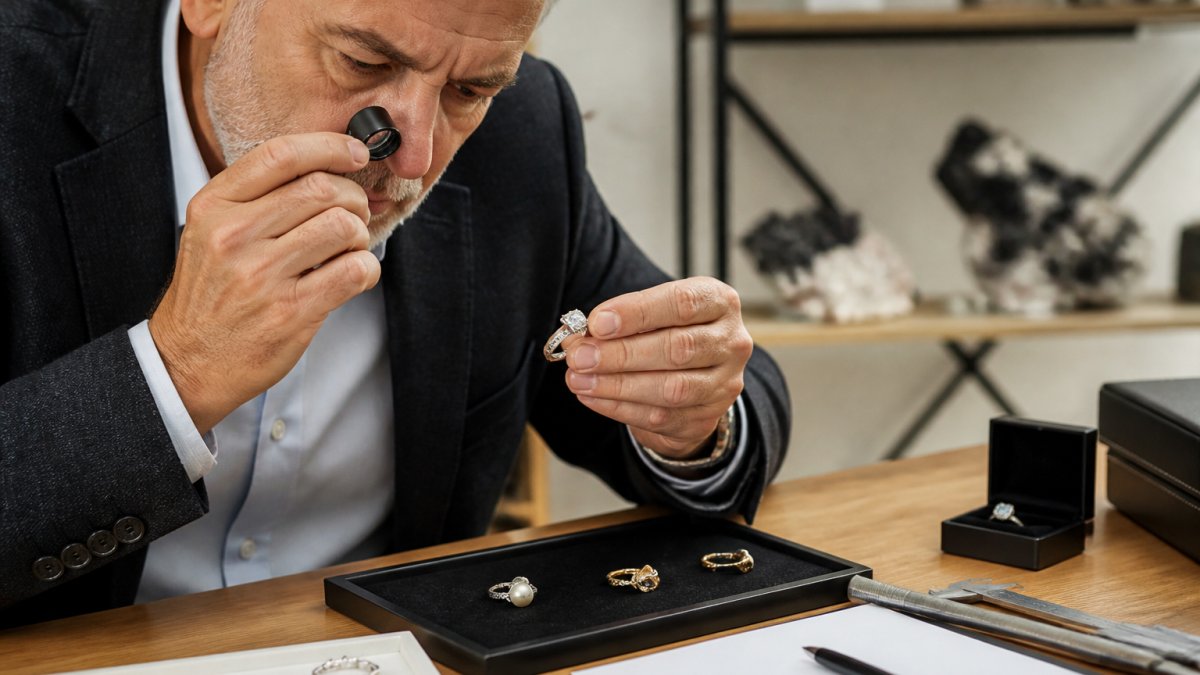
A formal jewellery appraisal is a written valuation prepared by a qualified valuer after a close examination of each item.
A formal appraisal usually starts with identification. The valuer examines the metal, the stones and any hallmarks, and records weights, dimensions and visible wear.
The written report is the document that matters most. It is the record a lawyer, insurer or executor will rely on, so it needs to be clear, specific and dated.
- Identification: metal, stones, hallmarks and maker's marks
- Examination: weight, condition, damage and repairs
- Valuation: a stated value for a stated purpose and date
- Report: a signed, itemised document with photographs
Formal Jewellery Appraisal vs Estimate: What Separates Them
A formal jewellery appraisal is a signed, documented valuation. An estimate is a quick opinion, often given without a full examination or a written report.
The difference matters when the value has to be accepted by someone else. An insurer, a court or a beneficiary is more likely to rely on a report with clear methods and a named valuer.
Watch out: an informal estimate can look like a formal valuation. Ask whether a written report, a stated purpose and a signature will be provided before you rely on the number.
How to Value Inherited Jewellery Before You Decide
Start by listing every piece, then sort them by likely importance. Photograph each item, note any marks and keep the packaging, receipts and old valuations.
Most people can do this step themselves in an afternoon. It shows you what you actually have before you spend money on an appraisal.
- Photograph each piece from several angles
- Note any hallmarks, maker's marks or engravings
- Record weights and stone details if they are known
- Keep any previous valuations or receipts
Small Estate Cost-Versus-Benefit Test
A formal appraisal is worth it when the report changes a decision someone else will rely on. For a small estate, the test is not whether the jewellery is nice; it is whether an inaccurate number would cost more than the report. Work through the questions below in order and stop at the first one that applies.
A threshold-based decision tree
- Is a written valuation legally required? If a solicitor, the probate registry or a court has asked for a value at the date of death, commission a formal report. An informal estimate will not satisfy the requirement and may need to be redone.
- Is any single item, or the collection as a whole, likely to exceed the estate's threshold for concern? Most practitioners find that the cost of a report is easier to justify when the jewellery is a meaningful share of the estate, or when one piece could attract a buyer, insurer or beneficiary dispute. If the pieces are modest and no one else needs the number, an informal opinion is usually enough.
- Is there disagreement among beneficiaries? If two people expect different outcomes, a signed, itemised report from an independent valuer is cheaper than a dispute. It also protects the executor, who can show they acted on professional advice.
- Is a sale planned? A formal report helps set an asking price and gives buyers confidence, but it is not a guarantee of what a buyer will pay. If the estate intends to sell, get the report before listing.
- Is insurance the only purpose? An insurance valuation may be enough. Check what the insurer accepts before paying for a broader estate report.
Fee models and what the fee includes
Appraisal fees are often quoted in several ways, and the model matters as much as the number. Pricing depends on quantity, dates and the work involved, so request a written quote from Gemmological Valuations of Australia's website for current figures:
- Flat fee per report, common for a single item or a small, defined collection. Ask what happens if the valuer finds more items than expected.
- Hourly rate, suits mixed collections where examination time varies. Ask for an estimate of hours and what counts as billable time.
- Per-item pricing, simple to compare, but check whether a low per-item rate excludes photography, research or the written report.
- Written-report fee on top of inspection, some valuers inspect first and quote the report separately. Confirm the total before you commit.
Ask whether the fee includes photographs, gemstone testing, metal testing, research time, travel and a signed report. A quote that excludes the written report is not comparable with one that includes it.
Watch out: a valuer who offers to buy the pieces they are appraising has a conflict of interest. Ask for an independent report and, if you want to sell, get a separate offer.
Worked example: three pieces worth under $5,000
Suppose an executor holds three pieces of modest value: a gold chain, a dress ring and a costume brooch. The estate is small and the beneficiaries agree on the split.
Applying the decision tree: no legal requirement applies, no single item is likely to trigger a dispute, and no sale is planned. A full formal appraisal of all three may cost more than the difference it makes.
This is a general illustration. Actual fees depend on the work involved and should be confirmed in writing.
The article sets out the decision points that determine whether a formal appraisal is worth the cost for a small estate.
| Decision point | Question to ask | If yes |
|---|---|---|
| Legal requirement | Has a solicitor, court or probate registry asked for a value at date of death? | Commission a formal report |
| Share of estate | Is the jewellery a meaningful share of the estate or one piece likely to attract a dispute? | Formal report is usually justified |
| Beneficiary disagreement | Do beneficiaries expect different outcomes? | Signed, itemised independent report |
| Planned sale | Does the estate intend to sell? | Get the report before listing |
| Insurance only | Is insurance the only purpose? | An insurance valuation may be enough |
| Modest pieces, no dispute | Are pieces modest and no one else needs the number? | Informal opinion is usually enough |
When Probate Requires a Jewellery Valuation
Probate is the process of proving a will and confirming the executor's authority to administer the estate. As part of that process, the executor usually has to file an inventory of the estate's assets with an estimated value. Jewellery is one of the asset classes that must be included, but not every estate needs a separate formal jewellery appraisal.
What a probate value actually is
A probate value is the value of the item at the date of death, not the price it might fetch at a later sale and not the replacement cost used for insurance. Those are different figures, and mixing them up is a common error. A formal report prepared for estate purposes should state the basis of value, the date of death and the valuer's method. That is what makes it checkable later if the estate is audited or a beneficiary asks questions.
When a formal report is likely to be needed
A formal jewellery valuation is more likely to be required or prudent when:
- the jewellery is a significant share of the estate's value;
- the will contains a specific gift of jewellery and the executor needs to identify and value it;
- beneficiaries disagree about what the pieces are worth;
- the estate may exceed a tax or reporting threshold that depends on asset values;
- a solicitor or the probate registry asks for supporting evidence.
Where the estate is small and the jewellery is modest, an executor may be able to rely on a documented estimate, provided it is dated and records the basis of value. The safest course is to ask the solicitor handling the estate what the registry in that state or territory expects.
Separate the legal question from the insurance question
Executors often confuse two documents. A probate valuation answers "what was this worth at death for estate purposes?" An insurance valuation answers "what would it cost to replace this today?" They can be different numbers, and an insurer may not accept a probate report for cover. Keep the two purposes separate and tell the valuer which one you need.
Watch out: probate rules and thresholds differ by state and territory, and they change. Do not rely on a general article, including this one, for the rule that applies to a particular estate. Confirm the requirement with the solicitor handling the estate or the relevant probate registry before commissioning work.
For a deeper look at how valuations are handled in formal legal contexts, read our Jewellery Appraisal for Family Law: A 2026 Guide.
When an Insurance Valuation Is Enough and When It Isn't
An insurance valuation states the replacement value of an item so it can be covered properly. It is often enough for household insurance, but it may not show the value needed for estate purposes.
Check with your insurer about what document they accept. Some require a named valuer or a report dated within a set period.
- Insurance valuation is usually enough for everyday cover of personal pieces
- A formal report is usually needed for probate, disputes or a sale
- Check the wording each organisation uses before you commission the work
Choosing Your Next Step for the Estate's Jewellery
If the pieces are valuable, or a lawyer or insurer needs a formal document, a professional appraisal is the safer choice. Look for a qualified valuer who can show their credentials and explain their fees in writing.
If the estate is small and the stakes are low, start by documenting the items yourself and get a quick opinion before going further. You can review our Jewellery Valuation Experts for more about the valuers, or contact us today to ask questions before you decide.
Ready to get clear on your estate's jewellery? Get in touch with Gemmological Valuations of Australia for a careful, documented valuation you can rely on.
Frequently Asked Questions
Is a formal jewellery appraisal worth it for a small estate?
It depends on the total value and what the report is needed for. For a small estate where the jewellery is modest and no probate or insurance requirement applies, an informal estimate is often enough. A formal appraisal is worth the fee when the items are individually valuable, when a bank, insurer or court asks for a written report, or when beneficiaries disagree about value. Compare the appraisal fee against the difference it could make to the outcome before booking.
What is the difference between a jewellery appraisal and an informal estimate?
A formal jewellery appraisal is a signed written report from a qualified valuer that describes each item, its condition, materials and stated value, and states the valuation basis and date. An informal estimate is a verbal or quick indicative opinion without that documentation. Estimates are useful for deciding whether to proceed, but they are usually not accepted by insurers, banks or courts as proof of value.
Can an estate use an insurance valuation to divide inherited jewellery?
An insurance valuation states replacement value, which is usually higher than market value, so it may not reflect what the estate would realise on sale or what beneficiaries should share. Executors often use it for insurance cover, but for dividing assets fairly, many estates ask for a valuation that states market value on a specified date. Check with the executor or a solicitor which basis the estate needs before relying on one report.
What should a jewellery appraisal include?
A reliable appraisal lists each item with a description, weight, metal purity, gemstone details where relevant, measurements, condition and any markings, along with photographs. It should state the valuation type, the valuation date, the valuer's name and qualifications, and the signature. Reports missing these details are harder to use for probate, insurance or dispute resolution, so ask for them up front.