 How-to
What Happens During a Watch Movement Inspection for Valuation
Last Updated: November 14, 2026
Quick Summary
A watch movement inspection examines the internal mechanism to judge originality, condition and performance. The appraiser identifies the watch, examines the case and movement under magnification, tests timekeeping on a timing machine, and records the findings in a report.
- The movement is often the biggest factor in a watch's value, beyond its brand.
- Bring original papers, service records, photographs and accessories, but do not open the watch yourself.
- A timing machine records rate, amplitude, beat error and trace pattern.
- Originality is judged by whether serial numbers match and parts fit the factory specification.
- Check with an unknown workshop before valuation, since unnecessary work can hide evidence of originality.
Table of Contents
- Why the Movement Decides Most of a Watch's Value
- Preparing Your Watch for a Movement Inspection
- Step-by-Step: How the Movement Is Examined
- Watch Movement Condition Grading Explained
- How Non-Original Parts Change a Watch's Value
- How Long a Watch Appraisal Takes, From Start to Certificate
- Booking Your Watch Movement Inspection
- Frequently Asked Questions
Why the Movement Decides Most of a Watch's Value
When you bring a watch in for valuation, the movement is often the single biggest factor in its worth. The case and dial catch the eye, but the mechanism inside does most of the work. A movement that runs accurately, is original, and has been properly serviced can carry a watch's value far above one that has been altered or neglected.
A movement is the internal mechanism that keeps time and drives the hands, made up of parts like the balance wheel, hairspring, escapement and mainspring. Two watches that look identical outside can have very different movements, and that difference can change the valuation considerably.
- Originality: A movement that matches the factory specification is worth more than one with replaced parts.
- Performance: A movement that keeps accurate time is more desirable to buyers and collectors.
- Condition: Wear, corrosion or damage inside the movement can be costly to repair and will lower value.
Many owners assume a watch is valued mainly by its brand. If you want to see how valuation approaches change depending on why an appraisal is needed, our jewellery appraisal guide for family law and other purposes covers the differences. Brand matters, but two watches from the same maker can differ widely in value depending on their movement history.
Preparing Your Watch for a Movement Inspection
Good preparation helps the inspection go smoothly. You do not need to do anything technical, a few simple steps are enough.
- Any original papers: Warranty cards, booklets, boxes and receipts.
- Service records: Any documentation of past servicing, including the name of the workshop.
- Photographs: Clear images of the dial, case back and movement if you have them.
- Accessories: Original straps, clasps and tools, if you still have them.
Please do not open the watch or attempt repairs yourself. Opening a movement without the right tools can cause damage that lowers its value. Bring the watch as it is, and let the appraiser handle it.
Tell the appraiser about any problems you have noticed, such as running fast or slow, stopping, or a drop, so they know where to look.
Watch out: Do not have a watch cleaned or serviced by an unknown workshop just before valuation. Unnecessary work can remove evidence of originality and make the movement harder to assess.
Step-by-Step: How the Movement Is Examined
A movement inspection generally follows a sequence, with each step building on the last.

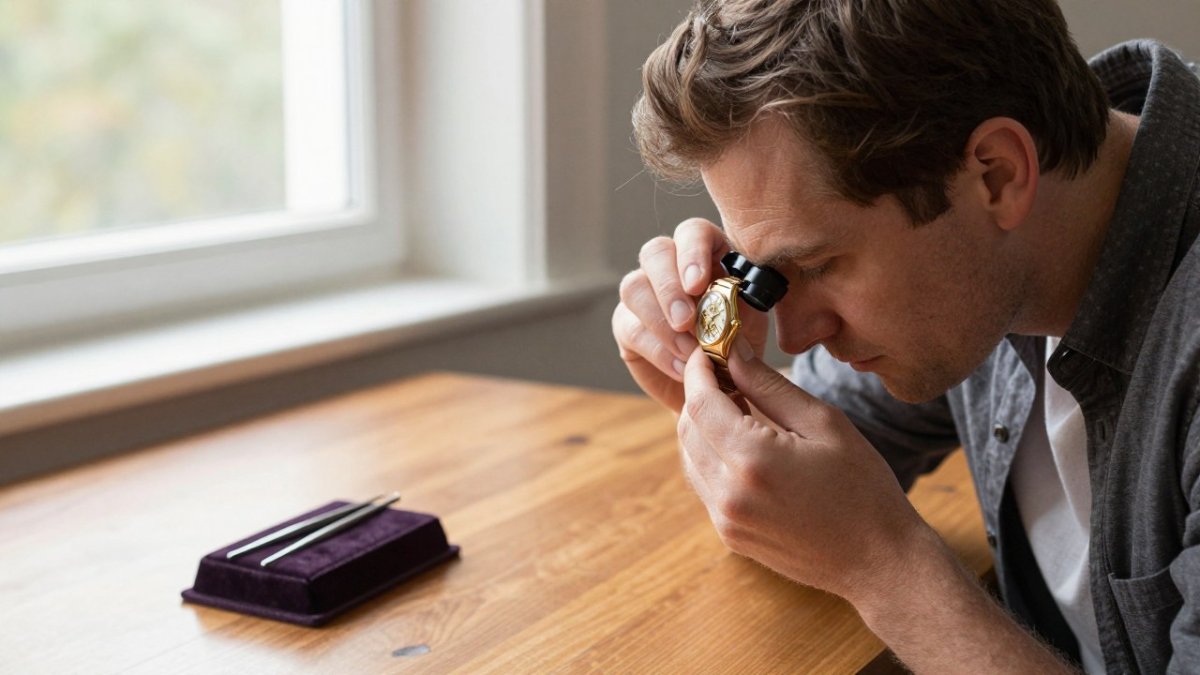
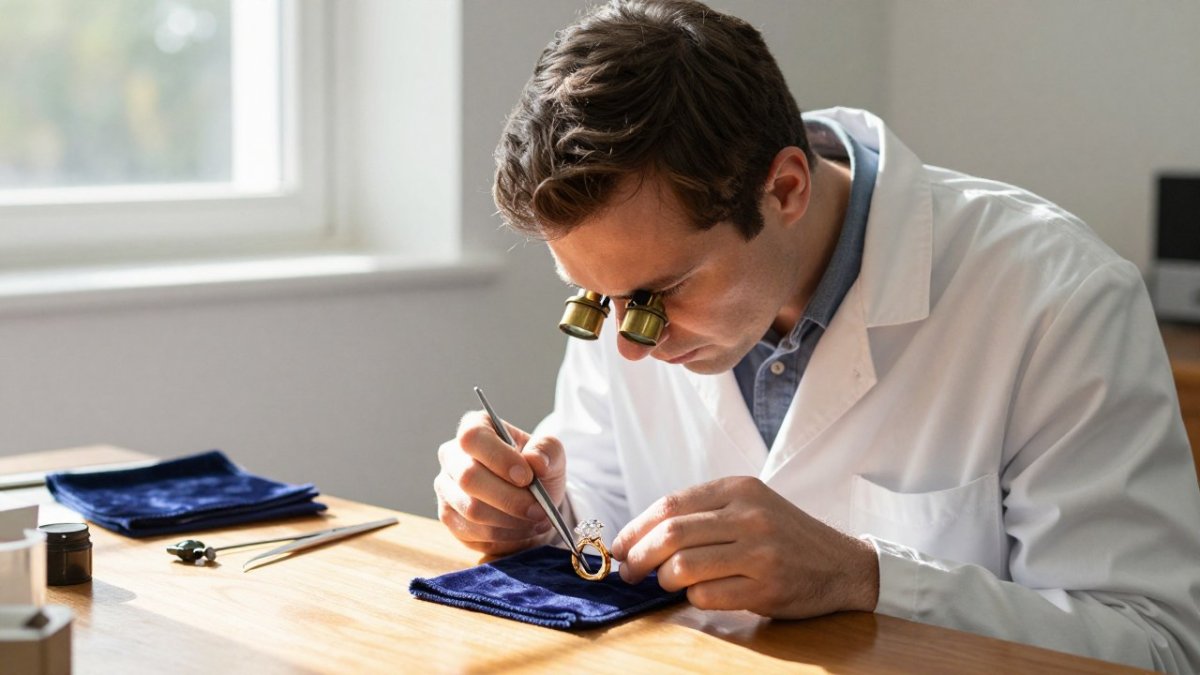
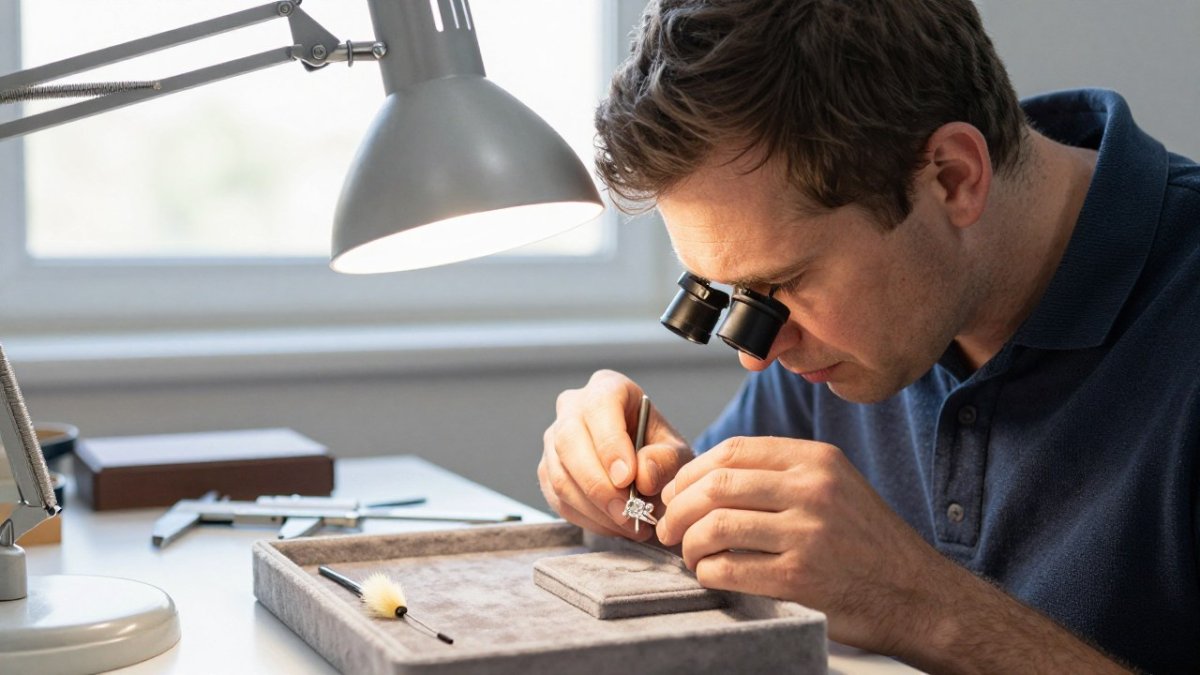
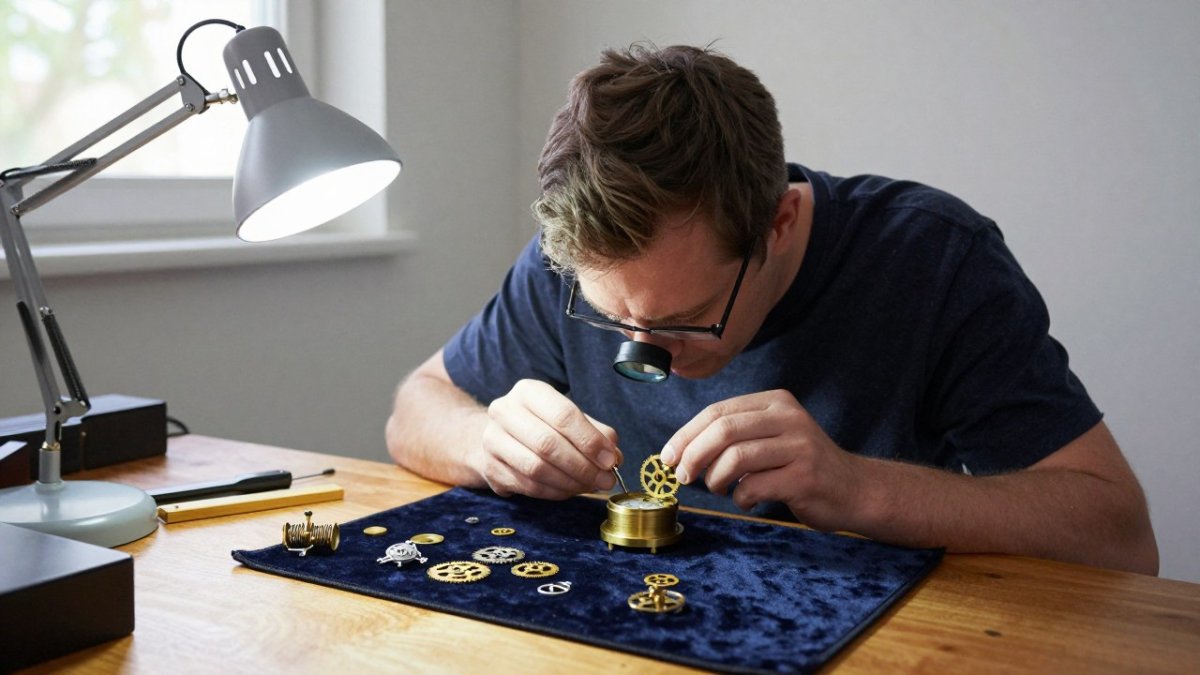
!Professional appraiser examining an open watch movement through a loupe at a clean workbench in a bright workshop, with tweezers and a notepad beside it
- Identify the watch: Confirm the brand, model, reference and serial number to establish the factory specification the movement should match.
- Visual inspection of the exterior: Examine the case, dial, hands and crown under magnification for wear, re-polishing and damage. Tool marks around the case back are an early clue the watch has been opened before.
- Open the case: Remove the case back with the correct tools. A cross-threaded or gouged case back or wrong gasket is recorded, as it affects condition and water resistance.
- Examine the movement: Under a loupe or stereo microscope, inspect the finish on the bridges and plates, the screws, the jewels and any corrosion, debris or dried lubricant. Look for signs of previous work, mismatched screw heads, scratched plates, or parts that do not belong to that calibre.
- Test the performance: Mount the watch on a timing machine (timegrapher) and record rate, amplitude, beat error and the trace pattern.
- Record the findings: Note serial numbers, part numbers, readings and photographs so the findings can be reproduced in the report.
Checking Originality and Authenticity
A movement is generally considered original when its parts match what the manufacturer fitted when the watch was made.
- Matching serial numbers: The movement number should match the case where the maker intended.
- Factory finishing: Original finishes, such as the decoration on the bridges, look different from most later replacements.
- Correct components: Each part should match the factory specification for that model and year.
- Signs of tampering: Mismatched screws, damaged finishes or unusual tool marks suggest past intervention.
Many owners are surprised how much a single replaced part can affect value. A watch that runs well may still have a non-original movement.
Assessing Amplitude and Rate Stability
Two measures tell us a great deal about a movement's health: amplitude and rate stability, both measured on a timing machine, or timegrapher.
- Amplitude describes how far the balance wheel swings, measured in degrees. A healthy movement usually has a strong, steady amplitude. A weak one may need cleaning, lubrication or part replacement.
- Rate stability describes how accurately the watch keeps time over a set period, and how consistent that accuracy is. A watch that gains or loses time unevenly is harder to value well.
- Beat error describes how evenly the balance swings in each direction. A small beat error is normal; a large one points to a poorly adjusted escapement.
The examination follows a clear sequence, and the table below summarises each stage and what it establishes.
| Step | What is checked | Purpose |
|---|---|---|
| Identify the watch | Brand, model, reference and serial number | Establish the factory specification |
| Visual inspection | Case, dial, hands and crown under magnification | Spot wear, re-polishing and damage |
| Open the case | Case back threads, gouges and gasket | Record condition and water resistance |
| Examine the movement | Finish, screws, jewels, corrosion and debris | Look for signs of previous work |
| Test performance | Rate, amplitude, beat error and trace pattern | Measure timekeeping health on a timing machine |
| Record findings | Serial numbers, part numbers, readings and photos | Make findings reproducible in the report |
Watch Movement Condition Grading Explained
Once the inspection is complete, the movement is given a condition grade, a clear, standard summary of its state for owners, insurers and buyers.
- Excellent: Original, fully functional and well maintained, with no visible wear.
- Very good: Original and working well, with minor signs of age.
- Good: Working, with some wear or past servicing that may have affected originality.
- Fair: Working but showing clear wear, or needing attention soon.
- Poor: Not running reliably, or with significant damage or missing parts.
How Non-Original Parts Change a Watch's Value
Non-original parts affect value differently depending on what was replaced and why, so each case is assessed on its own facts.
-
Factory-correct replacements: A part supplied by the original maker for that model may have little effect on value.
-
Non-original replacements: Parts from other sources can reduce value, especially if they change the appearance or performance.
-
Missing original parts: Losing an original component, such as a dial or hand, often has a larger effect than a replacement.
-
Documented work: A clear service record showing reputable work can make a non-original part easier to accept.
-
Keep any original parts you still have, even if they are not fitted.
-
Ask the workshop that did the work for a written record.
-
Do not assume that a non-original part always means a large drop in value.
Should You Service Before Valuation, or Sell As-Is?
This is one of the most common questions owners ask. The honest answer is that it depends on the watch, the fault and your reason for the valuation, and the arithmetic is not always in favour of servicing first.
-
The fault is minor and the watch is otherwise original. A clean, lubricate and adjust by a reputable workshop can restore amplitude and rate stability, and a documented service record supports the valuation.
-
You intend to sell and the buyer expects a running watch. A watch that stops or runs erratically narrows the pool of buyers and invites low offers.
-
The watch is going on an insurance schedule. Insurers generally prefer a watch that is in sound working order, and a recent service record can support the sum insured.
-
The watch is original and untouched. Servicing involves disassembly, and even careful work can replace worn parts with new ones. For a collectible watch, an untouched original movement can be worth more than a freshly serviced one.
-
The fault is major. A full overhaul, parts replacement or restoration can cost more than the uplift in value, particularly on a modest watch.
-
The work would be done by an unknown workshop. Poor workmanship, incorrect parts or a lost service history can reduce value rather than raise it.
How Long a Watch Appraisal Takes, From Start to Certificate
Timing depends on the complexity of the watch and how quickly the information is gathered. Simple cases take less time than watches with several complications or a long repair history.
- Booking and intake: Your watch is registered and any documents are noted.
- Inspection: The movement and case are examined and tested.
- Research: Market information and comparable sales are reviewed for that model.
- Report preparation: The findings and valuation are written up.
- Review and certificate: The report is checked before it is issued to you.
If you have a deadline, mention it when you book so the appraiser can plan around it.
Booking Your Watch Movement Inspection
A movement inspection gives you a clear, documented view of what your watch is worth and why, useful for insurance, estate planning, sale, or simply peace of mind.
To arrange your appointment, contact us today.
Gemmological Valuations of Australia provides careful, respectful jewellery and watch appraisal services. Our senior appraiser, Con Pappas, has more than 50 years of industry experience, and the business is a Founding Member of the National Council of Jewellery Valuers (No. 085). Get in touch with Gemmological Valuations of Australia to book your watch movement inspection.
Frequently Asked Questions
Will an insurance company accept a valuation from Gemmological Valuations of Australia?
Insurers review valuation reports as part of their assessment. Check your policy wording, and ask your insurer if they have specific requirements.
Do I need to bring my watch in if it no longer runs?
Yes, you can still bring it in. A watch that does not run can still be valued. Bring any documents that describe the last time it was working.
Can a watch be valued if the movement has been serviced before?
Yes. Past servicing can be relevant to the assessment, and what matters is whether the work kept the movement original and what the service records show.
How do I know the appraiser is qualified?
Gemmological Valuations of Australia is led by senior appraiser Con Pappas, with over 50 years of industry experience. The business is a Founding Member of the National Council of Jewellery Valuers, No. 085. You are welcome to ask about these credentials before you book.
Frequently Asked Questions
Why is the movement inspection the most critical part of a watch valuation?
The movement is the mechanism that keeps time, and its calibre, originality and running condition often account for much of a watch's worth. Two watches of the same model can differ widely in value if one has an original, correctly functioning movement and the other has been repaired with replacement parts. An inspection shows the appraiser whether the movement matches the reference number and whether it keeps reliable time, which directly affects the valuation figure you receive.
Do appraisers open the case back during a standard watch valuation?
Generally, a movement inspection requires the case back to be opened, and this should be done only by a qualified watchmaker or appraiser with the right tools. Your watch should not be opened by a non-specialist beforehand, as this can damage seals and make the condition harder to assess.
What specific components are checked during a movement inspection?
A movement inspection can look at the calibre, the balance and hairspring, the escapement, and signs of wear or corrosion. Timing performance is commonly assessed to understand amplitude and rate stability.
Can a watch be valued accurately without inspecting the movement?
A rough estimate can be made from the case, dial and reference number alone, but it will not be reliable for insurance or estate purposes. Without seeing the movement, the appraiser cannot confirm originality, service history or running condition, all of which can change the value significantly.